


Busy Toys Gone Bad
By Yvette Van Veen Toys…are neither good nor bad. Rather it’s how they are used. They can strengthen behaviour you like. If you’re not careful, they will strengthen behaviour you dislike. There are more toys out there than you can shake a stick at. You could say that busy toys are the new stick. Many people are convinced that if they just buy enough toys, the right toy, their dog will stop pestering them with jumping, nudging, barking, whining and more. They hope to buy calm. But could your busy… Continued
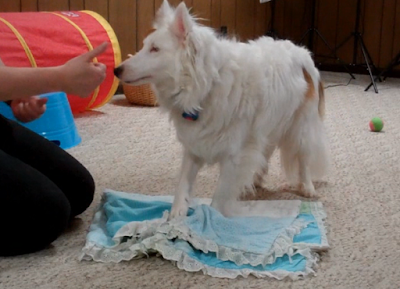
Learning a New Way to Communicate
By Debbie Bauer Sometimes we know in advance if our dog will lose sight and/or hearing. I have a senior dog now who is mostly deaf from age. So far his sight seems OK, but I know it too may begin to fade. There are some things we can do to help ease this transition for our dogs. One is to teach hand signals to our dogs for basic every day behaviors (sit, lie down, wait at the door, come) and for some of the fun tricks they know (fetch,… Continued

The Dark Side of Dog Training and Pet Care
By Angelica Steinker Original article, published in BARKS from the Guild, March 2018 pp. 14-21, features more photos of Sarge, Gunner, Blue, Max and Finn. *Caution: This article contains violent descriptions of dog death, abuse and neglect. “Prosecutions under general anti-cruelty statutes are occasionally successful but greatly hampered by the absence of legal standards pertaining specifically to training practices. Provided it’s in the name of training, someone with no formal education or certification can strangle your dog quite literally to death and conceivably get off scot-free.” – Jean Donaldson (2017) Dog training… Continued
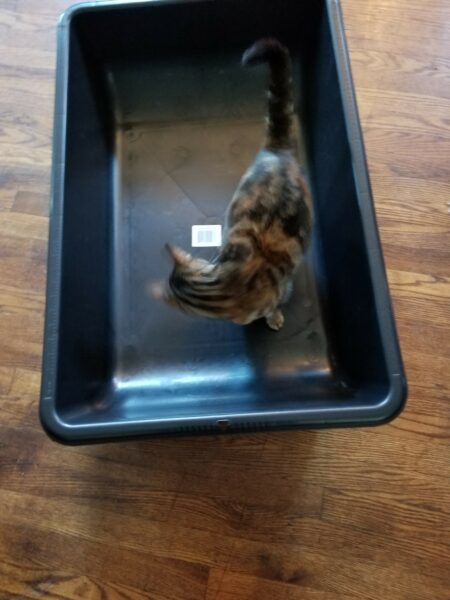
How Big Should a Cat’s Litter Box Be?
By Jennifer Mauger I was recently in a home where the resident cat was eliminating outside the litter box on a regular basis. He was a large Maine Coon mix weighing over 20 pounds. When I went to look at the litter boxes, they were well maintained, clean, and in quiet areas of the home. There were more than enough boxes for both of the cats too. The first thing I actually noticed was the size of the litter boxes. They were average size commercial litter boxes. When I asked… Continued

Clicker Training for Cats (6/6)
By Paula Garber and Francine Miller Inter-Cat Aggression Living with cats who do not get along is stressful for everyone. Sometimes the cats need to be completely separated and then formally re-introduced. In many cases, the best outcome we can hope for is for the cats to coexist peacefully to a point where they tolerate each other, even if they do not actively “like” each other. To facilitate peaceful coexistence, the environment must be arranged so that the cats can easily avoid each other and do not have to compete… Continued
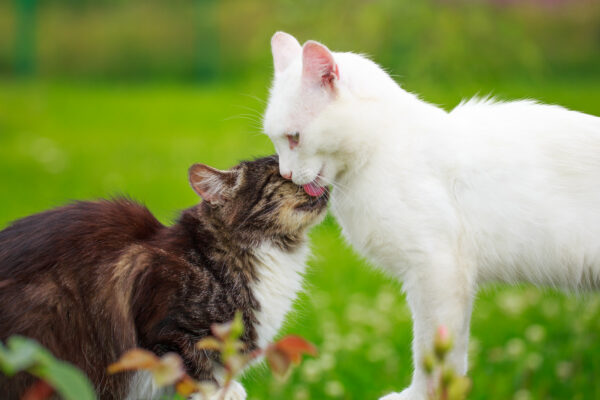
Clicker Training for Cats (5/6)
By Paula Garber and Francine Miller Introducing Cats to Each Other In a nutshell, cats should be gradually introduced to each other one sense at a time: first by scent, then by sight, and then physically. Throughout the process, positive associations are built up with the scent, sight, and physical presence of the other cat using food, play, brushing, low-key play—anything the cats enjoy. When introducing cats, you can use clicker training to help boost positive associations between them and keep them focused on you instead of each other. During… Continued

Clicker Training for Cats (4/6)
By Paula Garber and Francine Miller Clicker Training for Behavioral Problems: Clawing Furniture/Destructive Furniture Scratching Destructive furniture scratching is a commonly reported problem in cats, and one of the many unwanted behaviors that clicker training can help. Without going into all the reasons cats scratch (for more details on scratching, see Scratch Here, Not There, BARKS from the Guild, July 2016, pp. 25-26), it is suffice to say that cats have to scratch. It is a natural behavior that serves many purposes. Having said that, cats can certainly be taught… Continued
Why Every Cat Needs a Place to Hide
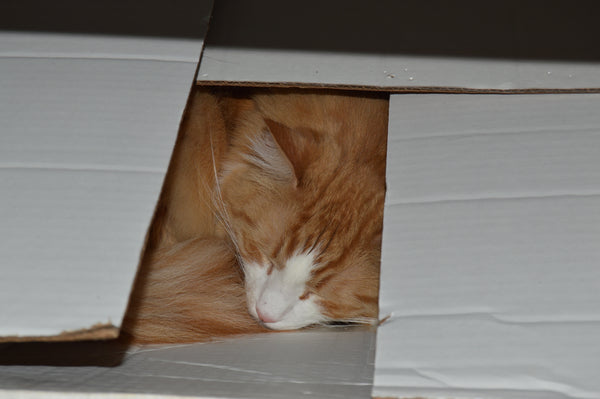
By Dr. Lynn Bahr Has your cat ever gone MIA in your own home? I lost an entire litter of kittens once in a small 1 bedroom apartment. All five furballs disappeared while I was out running errands. Imagine my panic and the frantic search that ensued to find them. Where could they have gone? I pulled out drawers, furniture, and the refrigerator to no avail. Fearing I would find them by smell weeks later, I sat on the couch to have a good cry. That was when I heard… Continued

Clicker Training for Cats (3/6)
By Paula Garber and Francine Miller Cats learn best when they are comfortable and free from distractions. They are sensitive and will flee from any threat or uncertainty (and we don’t work with them on a leash!) The best place to teach a cat is somewhere he finds quiet and familiar. This may be challenging because with their acute senses of smell and hearing they may be distracted by things we are unaware of. You should train in a place with a litter box available, fresh water and a place… Continued

How to Make Medicating Your Cat Easy
By Dr. Lynn Bahr Cats may look like cuddly little balls of fuzz, but as soon as the time comes to administer medication, all cat people know that they turn into lean fighting machines capable of inflicting serious damage to hands, clothes, and more. The last time we had to give medication to one of our cats, Peanut, she summoned the strength of giant tiger into her little 7 lb. body and managed to successfully fight off two grown adults, before running under the couch where we couldn’t get to… Continued
Clicker Training for Cats (2/6)
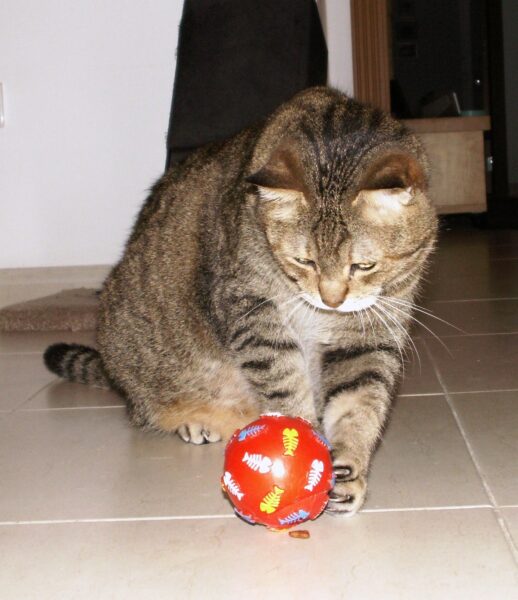
By Paula Garber and Francine Miller In clicker training, primary reinforcers are things that are instinctively or inherently rewarding to a cat. Reinforcers for cats should be given in small amounts and frequently to maintain learning momentum. For cats who are food motivated, use high-value food or treats for clicker training. Many cats like foods with a high animal protein content, like cooked or freeze-dried meat or fish. Other foods to try include canned tuna, deli meat, meat-based baby food (make sure it doesn’t contain onions), and liver paste made… Continued

Clicker Training for Cats (1/6)
By Paula Garber and Francine Miller Why train a cat? Why indeed. Myths about the trainability of cats abound: “Cats can’t be trained because they’re too independent.” “Cats are difficult to train because they are not food motivated.” “Cats don’t need training like dogs do.” These are all common misconceptions, but get ready to kick all the myths to the curb and add some useful cat training tools and techniques to your repertoire. Clicker Training Professional dog trainers will already know all about clicker training and many use the method… Continued

Case Study: Introducing a New Dog to Resident Cats
I used clicker training to help introduce my newly adopted dog, Ness, to the four cats in my household. Ness was under-socialized and had no experience with cats prior to adoption. The cats had only occasional exposure to visiting dogs during family holidays. During those visits, I provided my cats with a safe retreat and positive distractions such as Kongs filled with salmon paste. At the start of the introductions, Ness was tethered to me at all times on a loose leash while I was home. Since Ness was near… Continued

How Cats Play
By Beth Adelman Playing with your cat is not just fun and games. Play relieves boredom and stress, and can even help control behavior problems. In fact, a wide variety of feline behavior problems, from aggression to destructiveness to self-mutilation to inappropriate elimination to obsessive chewing, can be helped or managed by adding regular interactive play to a cat’s day. All Play Is Hunting The most important thing to remember is that for cats, play is always a form of hunting. Real prey is clever enough to make the hunt… Continued
Pain Underlying
By Dr. Lynn Bahr Most people who work professionally with cats know what stoic creatures they are and how well they can hide their pain. There are many different theories as to why this is. Until relatively recently, it was thought cats did not experience pain at all, based purely on the fact that they tend not to show it. Some people — including some feline professionals — even still believe this, despite significant advances to the contrary. It is an astounding reality that, in the year 2017, we still… Continued
A Good Start in Life
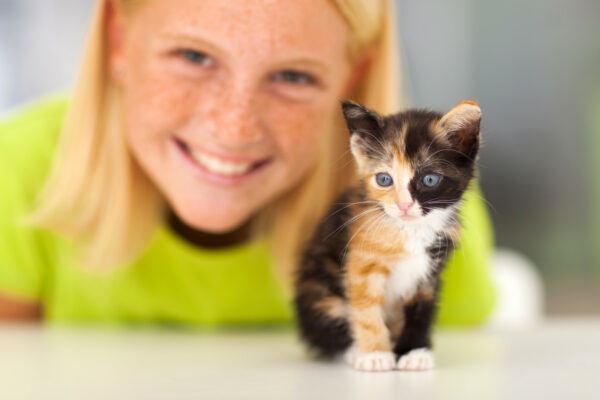
By Francine Miller Thankfully, more people are now aware that puppies need early socialization to have the best shot at being behaviorally healthy, but there are still many that are sketchy on the details of the process. Very few people are aware that kittens also undergo a sensitive period, and that socialization during their early weeks can greatly influence their temperament. Bateson (1979) defined a sensitive period as an age range during which particular events are especially likely to have long-term effects on individual development. A sensitive period may best… Continued
A Lesson in Tolerance
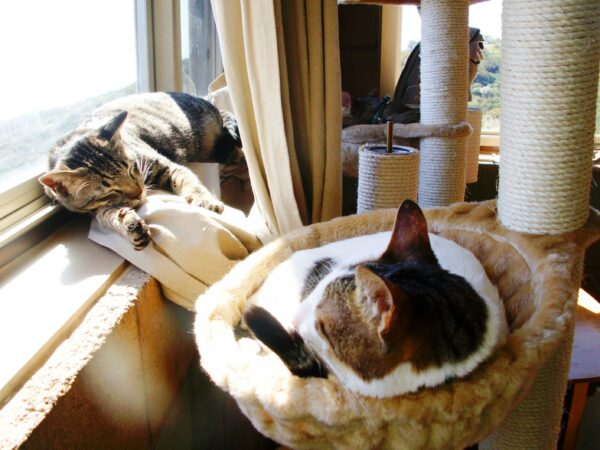
By Susan Nilson An estimated 40 – 75 percent of all cats that present with behavioral symptoms have some kind of elimination disorder, making it the most commonly reported feline behavior problem of all (Overall, 1997) and the most common reason cats are abandoned or surrendered to shelters. In this particular case, nine-year-old Ruby had started urinating around the house for no apparent reason. Ruby was an indoor spayed female domestic short-hair who lived in a four-cat household comprising her male sibling and two much younger cats, one male and… Continued

A Change of Lifestyle
By Marilyn Krieger According to a study by the Humane Society of the United States, based on data collected from 600 veterinarians, two out of three veterinarians recommend keeping cats indoors, citing vehicles and transmittable diseases as the two greatest potential dangers (HSUS Veterinarian Study, June 2001). Many cats enjoy napping in the yard or chasing insects. Many more are “street cats” who patrol the neighborhood, coming home only when it is time for dinner. Cats who are allowed to go outside face risks of being stolen, contracting parasites and… Continued

Thinking Outside the (Litter) Box
By Marilyn Krieger Litter box avoidance is one of the most common reasons cats are surrendered to shelters and euthanized. It is so sad and so unnecessary. Although the problem is hard to live with, it is also one of the easiest to solve. Some of the solutions are simple — others are more involved. Male and female cats of all ages can develop litter box challenges. There is always a legitimate reason for cats to avoid using their litter boxes. They are not bad cats, nor are they misbehaving.… Continued
Getting It Right First Time
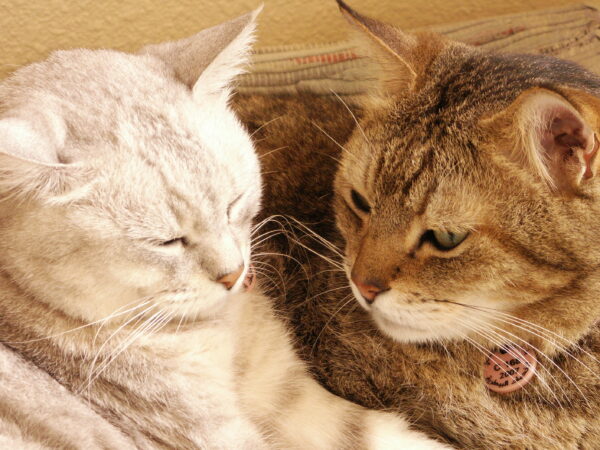
By Marilyn Krieger Like any pet, cats enhance lives and make a house a home. They excel at helping their people unwind after a stressful day. There is nothing quite as comforting as having a cat serenely napping nearby. Although cats bring joy and are great companions, they are a lifetime commitment. Think seriously before adopting—it should not be a spur of the moment decision. Make sure that you can support and provide the cat a loving, safe environment for his or her whole life. Before making the decision to… Continued
The Right Touch
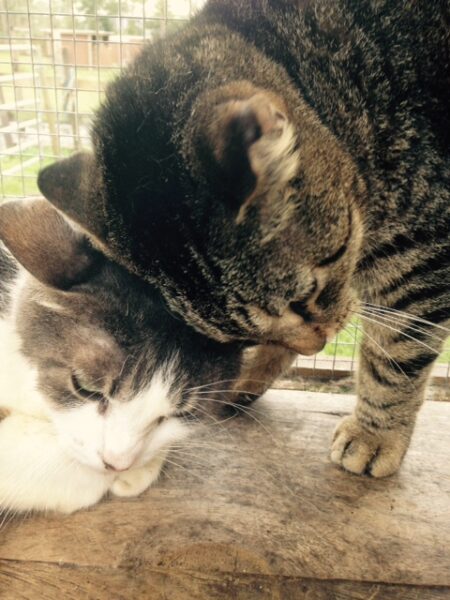
By Deirdre Chitwood I especially enjoy practicing Tellington TTouch® on cats at the shelter as it gives me an opportunity to use my skills in a place where there are so many different cats with so many different issues, both behavioral and health related. More importantly, it can also mean the difference between a cat spending his life in the shelter or getting adopted, and having the chance of a new start as a loved and cherished pet. I am also fortunate to have a cage-free, no-kill shelter in my… Continued
Spray Bottles Are for Houseplants, Not Cats
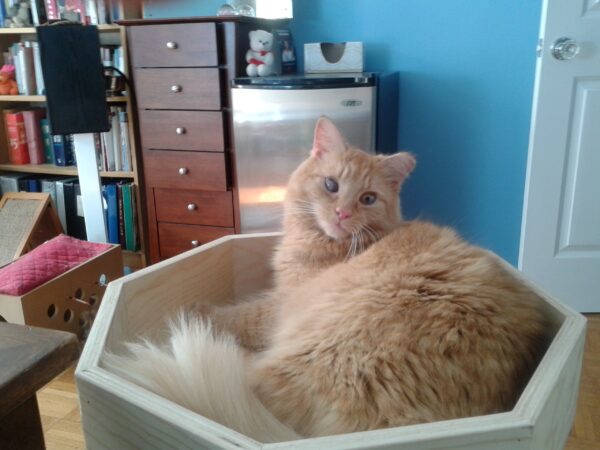
By Beth Adelman, MS It’s piece of bad advice that just won’t die: When your cat is misbehaving, squirt her with some water. Even some veterinarians still say it. What’s wrong with the spray bottle? Well, for starters, it doesn’t work. Yes, when you squirt your cat, she is very likely to stop what she’s doing and run away. But if you squirt her, say, when she jumps on your dinner table, what have you accomplished? You may have taught her to run away at the sight of the bottle;… Continued
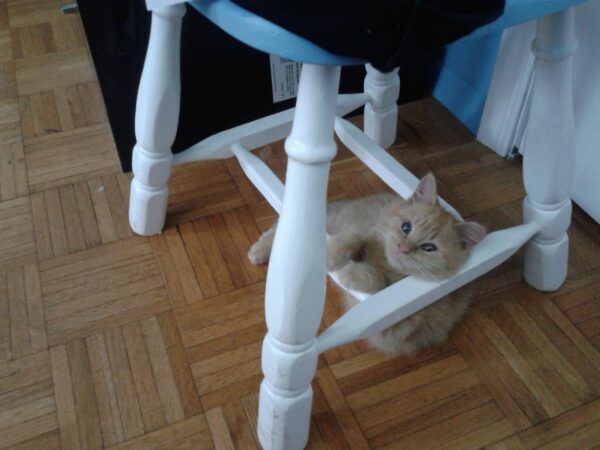
Meet Your Cat Where He Is
By Beth Adelman, MS “The problem many people have with their pets is simply that it’s not the pet they want,” said the veterinary behaviorist at a lecture I was attending. And an explosion of insight went off in my head. Sometimes, accurately naming a problem really does help you understand it. What did she mean? Sometimes we want a lap cat, and end up with a cat who likes to be in the same room (or even on the same piece of furniture) but not touching us. Sometimes we… Continued

Experts United: Breed Specific Legislation Does Not Work
The following is an excerpt from PPG’s recently released Position Statement on Breed Specific Legislation. Countless animal welfare organizations and professional bodies worldwide have issued position statements that comprehensively refute the efficacy of BSL as a means of reducing dog bites and increasing public safety. Victoria Stilwell, president of the Victoria Stilwell Academy for Dog Training and Behavior, and CEO of Victoria Stilwell Positively Dog Training “Without exception, I stand firmly against BSL. The research has shown time and time again that BSL does not reduce dog bites in the… Continued
« Previous 1 … 26 27 28 29 Next »

Barks
Topics
Archives