


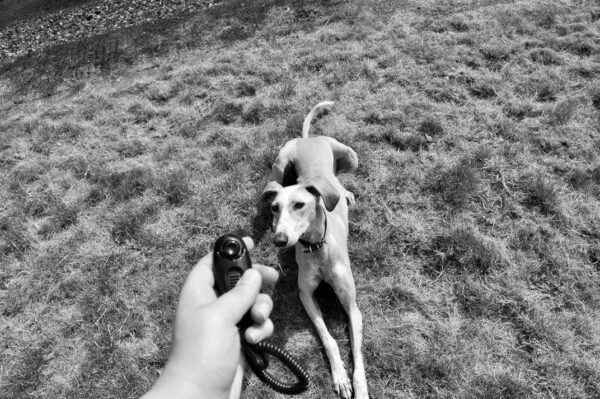
The What, Where and When of Rewards
By Lily Mickleburgh The use of rewards in dog training is becoming increasingly popular as an effective way of encouraging desired behaviours. However, subtle differences in what you use as a reward, where and when you reward them, can all change depending on your end goal. This may also vary depending on breed traits, age of the dog and whether you want to build energy or encourage calm in your goal behaviour. WHAT is the motivator? Toys are a great way of building energy and enthusiasm for something like heel work or recall,… Continued

January 28, 2019: New Study Examines Adult Womens’ Sleep Quality, Routines in Relation to Pet Ownership
Scientists have gathered data to investigate whether the presence of a pet in the bed impacts human sleep quality either positively or negatively, and found that “dogs who slept in the owner’s bed were perceived to disturb sleep less and were associated with stronger feelings of comfort and security. Conversely, cats who slept in their owner’s bed were reported to be equally as disruptive as human partners, and were associated with weaker feelings of comfort and security than both human and dog bed partners.” Read study
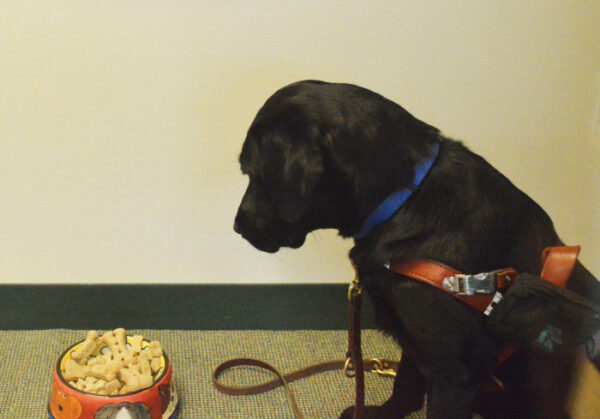
Dogs and Marshmallows
I’ve been interested in dogs and self-restraint for as long as I have trained dogs. So, several years ago, a friend and I applied an adapted version of the Marshmallow Test to her guide dog. Alberta passed with flying colors. Her current guide, Koala, also aced the test. For decades, the Marshmallow Test has been a sort of shorthand for self-restraint; it was thought to predict all sorts of things, like whether a person would do well on SATs or succeed in saving enough for retirement. In the spring, I… Continued
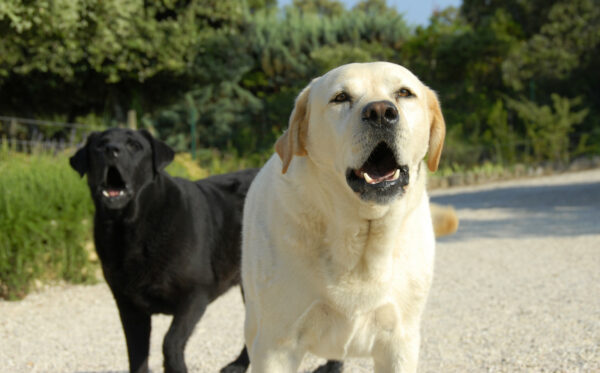
Dog Owner Confidence Crash!
There’s so much written about emotions of our dogs, how they’re thinking and what they’re feeling in various provocative situations and scenarios, but sometimes I think we, the dog owners, may end up being a little neglected! You can’t successfully help dogs with behavioral or training issues alone; you also have to see how they interact with their owner/dog guardian and what that relationship is. It’s a complex dynamic. One component of that incredibly complicated relationship I want to bring to the fore here though is confidence – one small… Continued
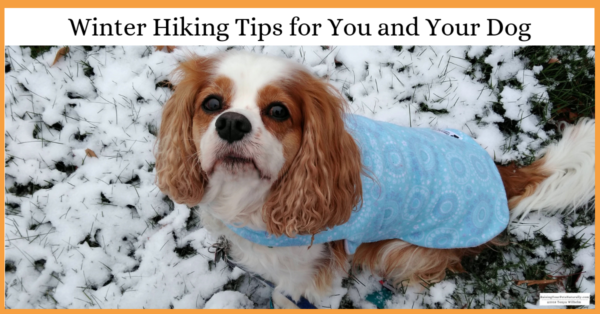
Winter Hiking Tips for You and Your Dog
Winter is here, but that doesn’t mean you and your dog need to stay inside. A dog needs both physical and mental daily exercise. Hiking with your dog in the winter can be a lot of fun. But, before you walk out the front door with your dog in tow, you and your dog need to be prepared for your winter hike. Below are some suggestions to get you and your dog ready for your Arctic adventure. Physical Abilities– Before setting up to climb Mount Everest, you want to truly… Continued
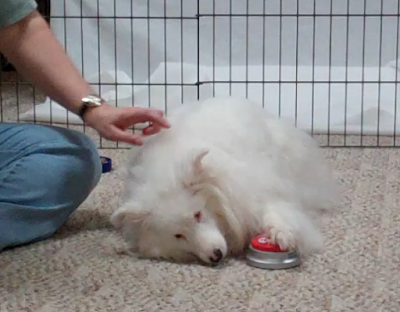
Getting Started with Touch Cues
By Debbie Bauer There are two types of touch cues – these are cues that you give to your dog by touching various parts of his body in different ways, to mean different things. If your dog can’t see or hear you cues, touch cues give you the perfect way to begin communicating with him. Having a way to communicate is crucial to living in harmony with your dog. You can tell him what to expect to happen, and how you want him to respond. And your dog will feel… Continued
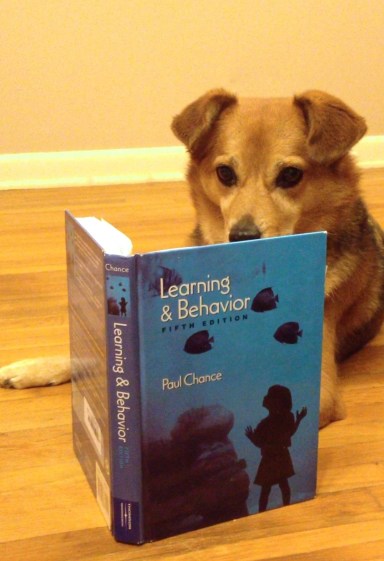
A Quadrant by Any Other Name is Still a Cornerstone of Operant Learning
This 2003 edition book is $4.89 on Amazon. Contents: priceless. There is a science that deals directly with how organisms learn and how to use that information to change the environment in order to change behavior. It’s called applied behavior analysis (ABA). It is the applied version of behavior analysis, which was referred to as the experimental analysis of behavior earlier in the 20th century. It is descended from the work of the behaviorists such as Skinner and is a sub-discipline of psychology. It is a rich field of study.… Continued

Getting Scientific about Dominance
By Don Hanson What we know about the science of canine behavior and dog training is continually evolving. As such, every year I like to select a new book to recommend to my students, my staff, area veterinarians, and my colleagues that I feel will be the most beneficial to them and their dogs. This year I have chosen Dog Smart: Evidence-based Training with The Science Dog by Linda P. Case. At the beginning of her book, Case states she has two primary objectives: “…to provide accurate summaries of some… Continued
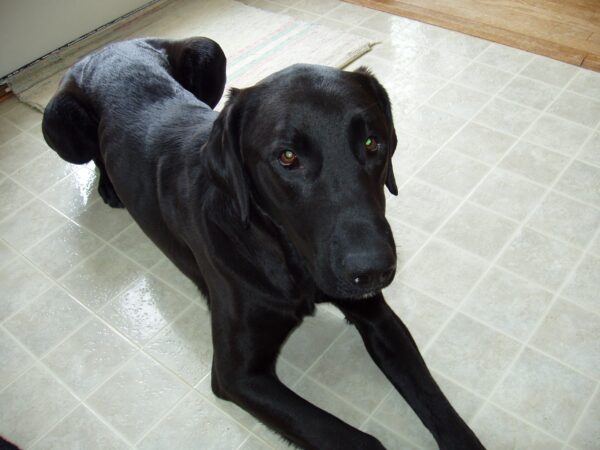
Give New Pets Time to Adjust
Getting a new pet is exciting and family members may feel eager to get started with all the fun they have imagined having with their new addition. That is certainly how I felt about every new animal which I took into my care over the years. Even though the new pet may well be in a better place than previously, this is a significant change for animals and people alike. Planning ahead can help avoid pitfalls. Considering the needs of the specific species is a good first step, and the… Continued
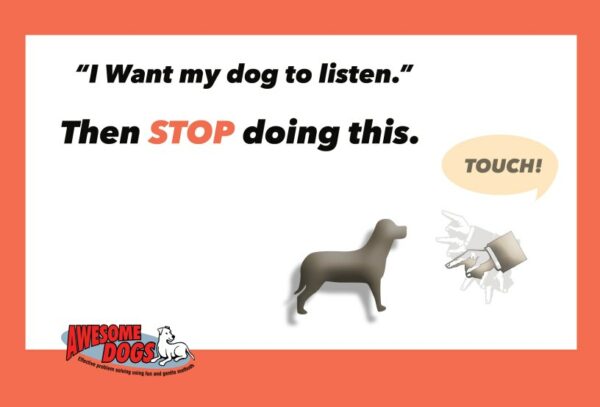
Want Your Dog to Listen? Stop Doing This!
By Yvette Van Veen Dog training often boils down to a single statement. “I want my dog to listen.” It’s a reasonable request and seems simple. We ask our dogs to do something. In return, we want the dog to listen to that request and respond in a timely manner. Training is the process by which we teach our dog to do this. People are often disappointed when they wind up with dogs that only seem to listen some of the time. They are disappointed that their dog only listens if they reach for a… Continued
January 9, 2019: Study Examines Cat-Human Social Behavior
A new study has been conducted to “assess the influence of human attentional state, population, and human familiarity on domestic cat sociability,” and reported that “[h]uman familiarity did not significantly influence pet cat sociability behaviors. Overall, a wide range of sociability scores was seen, indicating individual variation is an important consideration in cat social behavior.” Read study

Is “Maybe” Addictive?
By Louise Stapleton-Frappell In operant conditioning, behavioral responses that are positively reinforced increase in frequency, intensity or duration. The cue is given, the response occurs, reinforcement follows and the loop is repeated. One would perhaps expect dopamine levels to rise upon receipt of the reinforcer. But do they? Some studies have shown that increases in dopamine are not, in fact, directly related to the reinforcer. Rather, it is the anticipation of the reinforcer that causes dopamine levels to spike. Although dopamine signals may well be activated during the consumption of a tasty… Continued

Portland Blog Competition: Redirecting Aggressive Behavior
By Dr. Lynn Bahr As cat lovers, we’ve all been scratched at least once. But why do some cats play so rough when others never scratch or bite? Cats, by their very nature, are ferocious hunters. These behaviors are formed when they are very young by instinct, observation and playing with their littermates. Through stalking, chasing, swatting, biting and pouncing on their siblings, kittens develop their precise hunting skills. But when cats are removed from this environment too young or don’t have an adult cat to keep them in line,… Continued
Variety Is the Spice of Life
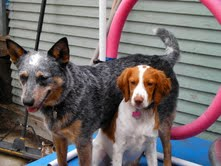
By Danette Johnston When I opened a dog day care 19 years ago, I did so because I had been working a shelter and noticed that the majority of the dogs in the shelter were there because they were not getting enough stimulation, both physical and mental. I thought a dog coming to day care five days a week would be swell. “A tired dog is a well behaved dog” right? Well, what I found in reality is that five days a week of day care is actually quite stressful… Continued

Barks
Topics
Archives