

Two Brains of the Same Mind- Part 1: Mental illness and the emotional connection between dogs and their humans with a focus on depression and anxiety with Dr. Robert Falconer-Taylor

This webinar session was broadcast as part of the Brain Train event – November 2025

Use the membership discount code you can find in your member area
On-Demand Webinar: Watch as soon as you register
Webinar Description
Mental health disorders, or psychiatric disorders, represent a heterogenous collection of conditions. Here is a shortlist of some of the most well-known examples – anxiety disorders, depression, bipolar disorder, post-traumatic stress disorder (PTSD), obsessive-compulsive disorders, schizophrenia, eating disorders, disruptive behavior and dissocial disorders, neurodevelopmental disorders (World Health Organization).
The worldwide annual cost of depression and anxiety alone is around one trillion dollars. To put the magnitude of this number into perspective, imagine counting up in seconds, 1-2-3…, non-stop, 24 hours/day. You would reach 1 million after 11 days, and 1 billion after 11,315 days (or 31 years). To reach a trillion, you would need to recruit 1,585 generations of your descendants because it would take about 31,700 years!
The human need to characterize mental illness goes back to Hippocrates and Aristotle who, 2,500 years ago, proposed a connection between mind and body through ‘bodily humors’, namely blood, yellow bile, black bile, and phlegm (a nod to the even more ancient Traditional Chinese Medicine). Fast-forward to the 19th Century Industrial Revolution which heralded in the birth of Psychiatry as a science where the root cause of mental health problems was posited as a reaction to the environment (poverty, racism, traumatic events, etc.)
Beginning in the 1950s, psychiatric illness became systematically classified in the Diagnostic and Statistical Manual (DSM), which was updated every decade or so. The current DSM is volume 5 (DSM-V), published in 2013. The significant difference for us across these updates is the shift in emphasis from reactions to external environmental conditions to internal disorders manifested in the tissues of the brain itself. This approach has led psychiatry into a cul-de-sac because the fundamental lists of diagnostic categories has never been supported by the science.
But it’s not all bad news. A huge corpus of informative research has emerged over the last 30 years, most of which employed the use of animal models. From this data we can learn a great deal about mental illness in our dogs, how it compares to mental illness in ourselves, and how this affects the emotional connections between us.
Learning Objectives:
- Understand what mental illness is from the human psychiatric perspective.
- Understand the advantages and limitations of its extrapolation into the mental lives of companion dogs.
- Understand the science of how our own mental lives are intimately interconnected to those of the ‘significant others’ around us.
Your Presenter – Dr. Robert Falconer-Taylor, BVetMed, DipCABT, MRCVS
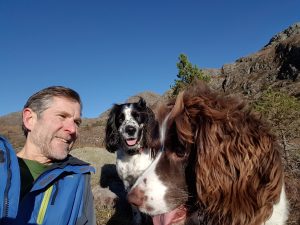
Dr Robert Falconer-Taylor BVetMed, DipCABT, MRCVS
Robert has worked in the veterinary profession for nearly 30 years, as a partner in an innovative small animal hospital group and as a locum. Alongside his role in day-to-day clinical medicine, Robert has also been very much involved in the management, communication, and education side of veterinary practice. During this time, he was directly involved in the conception and implementation of computerisation into the profession. This included a cross-fertilisation with the human healthcare system in the UK and the development of cross-platform coding and classification systems for disease identification, tracking and surveillance. This is now an integral part of the World Health Organisation’s One Health initiative.
CURRENT ROLES
Academic Advisor for the Association of INTODogs community.
Scientific Advisor and Educator for the Pet Remedy Company (companion animal behaviour & welfare).
Trustee and veterinary advisor for Springer Rescue for Scotland Charity.
International consultant to the pet industry (development and risk assessment of pet ‘toys’ targeted & promoting the welfare of pets and their relationships with their guardians. Development of practical and easy-to-use Mood State Assessment tools for dogs, cats and horses.
Active participating member of the social media-led ‘global companion animal community’
His current primary academic interests include companion animal cognitive science and emotionality, nutrition and its effects on behaviour, and applied neurophysiology, pharmacology, and therapeutics in companion animal behaviour therapy.
PPG Members
PPG Members, use your Member Webinar discount coupon code at registration to access your membership rate. The code can be found in your membership area.
Not yet a member? Click here to join and begin receiving discounts on PPG member events.
Bookings
Log in if you already have an account with us.