

Two Brains of the Same Mind – Part 2: The function of moods and emotions in dogs and their humans; from the good to the bad and the downright ugly with Dr. Robert Falconer-Taylor
This webinar session was broadcast as part of the Brain Train event – November 2025
Use the membership discount code you can find in your member area
On-Demand Webinar: Watch as soon as you register
Webinar Description
In the scientific literature, there are as many as 93 different definitions for emotions (Izard, 2010). The mega-online retailer Amazon lists over 60,000 books about emotions. Emotions, emotions, emotions. They’re everywhere. But do we really have an objective and useful understanding of what they are? Likewise for mood states. However, getting bogged down in the linguistic philosophical weeds is best avoided in the context of this conference. Rather, the approach taken here is their function in health and their dysfunction in disease in the every-day lives of dogs and their people. The term ‘affective states’ is used here as meaning both emotions and mood states, which will be a catachresis for some, but never mind!
Anthropomorphism – seeing the emotional lives of our dogs through the eyes of our own – has been the cornerstone of my ‘two brains of the same mind’ metaphor, which can famously be traced back to Charles Darwin and before.
Over the last 30 years, the rapid development of new technologies has enabled scientists to study the brain at ever-increasing resolutions. Consequently, this places us in a position to make better-informed assumptions about the similarities and differences in affective states between our human ‘selves’ and the ‘selves’ of our dogs. In other words, we can draw a more objective line between supportive and destructive anthropomorphism.
Next, the spotlight of this presentation will focus on a practical overview of functional and dysfunctional affective states. It will then shine a light on a selection of common medical diseases. Veterinarians understandably focus on the diagnosis and treatment of the physical symptoms they are presented with in a patient. In addition, the medicines themselves may adversely impact a dog’s sense of well-being. The responsibility of the pet guardian here is to be the voice of their dog. Guardians need to make sure that the proposed medical treatment plan considers the increased emotional needs of their dog. There may be a role for using psychoactive medication here too, so a need-to-know summary of the pros and cons of using these options will also be covered.
Izard, C. (2010). The many meanings/aspects of emotion: Definitions, functions, activation, and regulation. Journals.Sagepub.com, 2(4), 363–370.
Learning Objectives
- Understand the role of emotions and mood states in the everyday lives of dogs and their people.
- Understand significant research technologies that are unravelling the neural correlates of affective states.
- Understand the benefits and perils of anthropomorphism in supporting the mental lives of our pets.
- Understand the negative impact of ‘unwellness’ in dogs and its treatment.
Your Presenter – Dr. Robert Falconer-Taylor, BVetMed, DipCABT, MRCVS
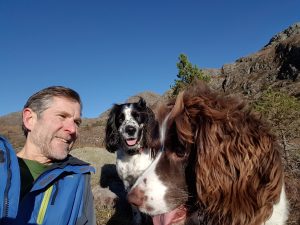
Dr Robert Falconer-Taylor BVetMed, DipCABT, MRCVS
Robert has worked in the veterinary profession for nearly 30 years, as a partner in an innovative small animal hospital group and as a locum. Alongside his role in day-to-day clinical medicine, Robert has also been very much involved in the management, communication, and education side of veterinary practice. During this time, he was directly involved in the conception and implementation of computerisation into the profession. This included a cross-fertilisation with the human healthcare system in the UK and the development of cross-platform coding and classification systems for disease identification, tracking and surveillance. This is now an integral part of the World Health Organisation’s One Health initiative.
CURRENT ROLES
Academic Advisor for the Association of INTODogs community.
Scientific Advisor and Educator for the Pet Remedy Company (companion animal behaviour & welfare).
Trustee and veterinary advisor for Springer Rescue for Scotland Charity.
International consultant to the pet industry (development and risk assessment of pet ‘toys’ targeted & promoting the welfare of pets and their relationships with their guardians. Development of practical and easy-to-use Mood State Assessment tools for dogs, cats and horses.
Active participating member of the social media-led ‘global companion animal community’
His current primary academic interests include companion animal cognitive science and emotionality, nutrition and its effects on behaviour, and applied neurophysiology, pharmacology, and therapeutics in companion animal behaviour therapy.
PPG Members
PPG Members, use your Member Webinar discount coupon code at registration to access your membership rate. The code can be found in your membership area.
Not yet a member? Click here to join and begin receiving discounts on PPG member events.
Bookings
Log in if you already have an account with us.