

Understanding the Neuroscience of Learning and Memory with Simon Gadbois, PhD

This webinar session was broadcast as part of the Brain Train event – November 2025
Use the membership discount code you can find in your member area
On-Demand Webinar: Watch as soon as you register
Webinar Description
Neuroscience has historically linked together the study of learning and memory. Learning is about acquisition, but the study of memory adds two sub-processes to the learning process: The storage of what has been learned, and the retrieval of what has been learned. Behind this perspective, hides a rich conceptualization of what learning is, and what “remembering” and “forgetting” are about in the field of training.
We will discuss the important literature of “working memory” in animals, and how it connects to attention. We will also discuss the conscious and unconscious processes in learning and memory (latent learning, latent inhibition, implicit and explicit memory, etc.) and how this perspective broadens how we think about both classical and operant conditioning.
Most of these terms (that we have all heard at some point or another when discussing “learning” or “conditioning”) are couched in the structure and dynamic processes of the brain. In other words, there are brain substrates specialized in these learning, storage, and retrieval processes. We will conclude that from the perspective of neuroscience, learning (acquisition of new behaviors and of information, and modification of behaviors) is not distinct from the mechanisms allowing for the storage and (conscious or unconscious) retrieval of what was learned.
Your Presenter – Simon Gadbois, PhD
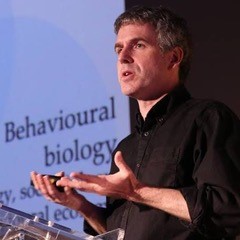
Dr. Simon Gadbois is a researcher in animal behavior and animal learning and psychophysics at Dalhousie University in Halifax, Canada. He integrates biology (ethology), experimental animal psychology (psychophysics and learning), and neuroscience within a post-cognitivist perspective. A generalist, he has studied olfaction, learning/memory and social behavior in species of mollusks (slugs and snails), fish (three species), reptiles (three species), birds (pigeons) and mammals (rats, dogs, red foxes, coyotes and wolves).
He has studied Canids for 30 years and established the Canid and Reptile Behaviour and Olfaction lab at Dalhousie in 2006. His research on wild canids was focused on natural action sequences and social endocrinology. His current research on domestic dogs is mostly on applications of olfactory processing, including medical alert dogs and wildlife conservation canines.
PPG Members
PPG Members, use your Member Webinar discount coupon code at registration to access your membership rate. The code can be found in your membership area.
Not yet a member? Click here to join and begin receiving discounts on PPG member events.
Bookings
Log in if you already have an account with us.