



Training Tips: My Puppy Is a Scaredy Cat
By Sally Bradbury The world can be a scary place for a puppy sometimes, so it is important that we don’t put him into situations that he cannot cope with. For example, if your puppy is scared of large chubby bearded men in red coats, then you can just keep him away from the chimney on Christmas Eve. However, we also need to help him to not be scared of everyday things like the vacuum cleaner, the dog behind the fence up the road, visitors to the house…all the things… Continued
Resolving Destructive Behaviour in Your Pet
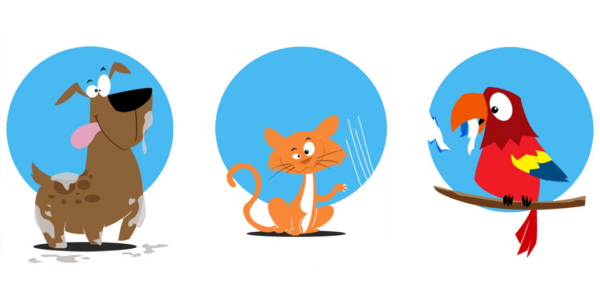
By Karolina Westlund Ph.D. of PPG corporate partner Illis Animal Behaviour Consulting Destructive behaviour can be extremely frustrating. Image: concept by ILLIS ABC, drawing by Pyrrth Destructive behaviour from your beloved pet can be a nuisance. Assuming there’s not an underlying medical condition or the behaviour isn’t anxiety-related, let’s look at some ways of addressing these types of behaviour, regardless of whether you’re a dog dude, a cat gal or a parrot person. Or hang out with any other critter, for that matter. I’m going to use cat furniture scratching as… Continued
Four Steps to a Thriving Group Class Program
By Veronica Boutelle of PPG corporate partner, dogbiz Do any of these group training class challenges sound familiar? Students who tell you their dogs “only behave during class” or “when the trainer is around” Starting class with 6 students and ending with 3 Students who check training off their list after Puppy or Basic Manners class, never to return Cancelling or postponing classes that don’t fill in time. Teaching half-empty classes Struggling to teach students with a wide variety of skill levels and needs Fitting in make-ups for students who… Continued
Hide My Deaf/Blind Dog Away?
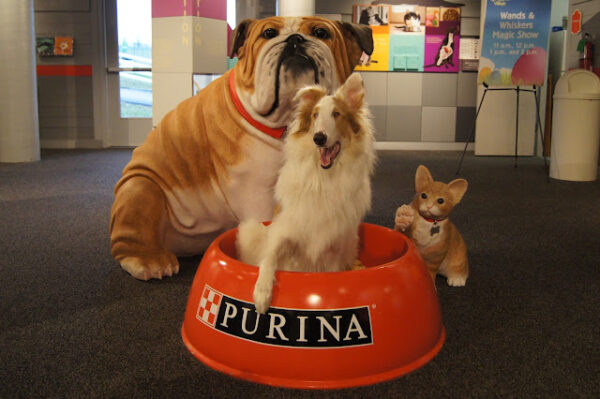
By Debbie Bauer Here is my handsome, clever, fun-loving boy Vinny on our recent trip to Purina Farms. This picture was taken at their Visitor Center and he is smiling, which is his normal state of mind. You see, on this day, it was Saturday morning and the Visitor Center was full of children! In fact, we struggled at times to get a picture, as children were running up to him trying to pet him and say hello. Vinny loves children! They are just at his nose height and he… Continued

July 22, 2019: Governor Cuomo Signs Legislation Banning Cat Declawing
New York Becomes First State in Nation to Ban Cat Declawing: Governor Andrew M. Cuomo has signed legislation (S.5532B/A.1303) banning the performance of declawing procedures on cats, making New York the first state to prohibit the practice. The bill takes effect immediately. “Declawing is a cruel and painful procedure that can create physical and behavioral problems for helpless animals, and today it stops,” Governor Cuomo said.“By banning this archaic practice, we will ensure that animals are no longer subjected to these inhumane and unnecessary procedures.” Read article
For The Curious 2 – Your Questions on Deaf, Blind Dogs Answered
By Debbie Bauer There were more great questions sent for my For The Curious series of posts! Thank you to everyone who sent such great questions that people often have about blind/deaf dogs and double merles! Are your blind/deaf dogs always on a leash or beside you? Are they able to roam freely at home and are they able to navigate a space they are familiar with? What about a space they are unfamiliar with? My b/d dogs are free to roam in the house or fenced areas. They know the space… Continued

#PPGSummit 2019: Sound Bites
By Susan Nilson “We need to be careful when using genetics as an easy ‘explanation’ for behavior…Genetics has an important and undeniable contribution to behavior, including aggression. However, how and to what degree genetics interacts with environmental variables is far from known. Understanding how environmental risk factors mixed with more susceptible genotypes may help contextualize risk and our understanding of behavior.” – Dr. Nathan Hall. Read article
Ask the Experts: Maximizing Your Training Space
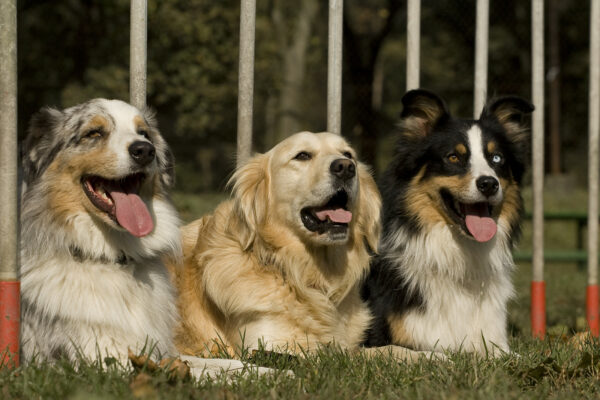
By Veronica Boutelle Make sure to use your space in ways that truly work for you. You’ve achieved your dream of having a facility. Be careful you get to enjoy it. That means passing on services that require you to spend time in ways you’d rather not (for example, tied to a day care floor instead of out day training, or overseeing a large staff when you’re really not comfortable doing so, etc.). Read article

The Escape Artist Dog
By Beth Napolitano According to PAWS (2019), we are justified in worrying about our dogs’ safety when we are out with them in public places: “Escaping is a serious problem for both you and your dog, as it can have tragic consequences. If your dog is running loose, he is in danger of being hit by a car, being injured in a fight with another dog, or being hurt in a number of other ways. Additionally, you are liable for any damage or injury your dog may cause and you… Continued
Thinking Inside the Box
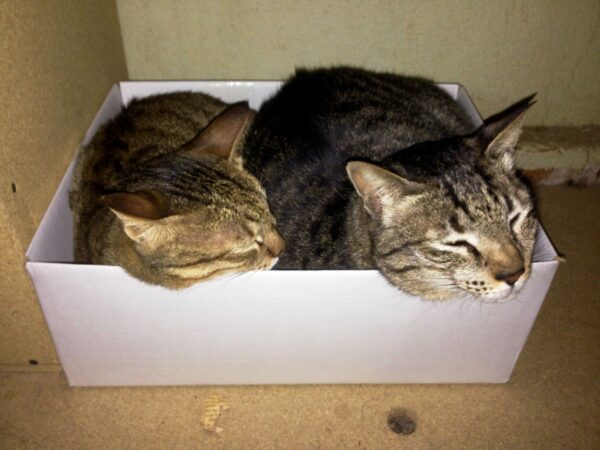
By Andrea Carne “If it fits, I sits.” How many Facebook memes and YouTube videos depicting cats squished into boxes and other small spaces have you chuckled over? It might be a packing box, a shoebox, even an egg carton – often far too small to actually fit the cat comfortably – and yet the said cats seem blissfully happy with their chosen spaces. While no definitive research study has come up with an answer, most behavior consultants agree boxes and other small, enclosed spaces provide a safe, secure hiding… Continued

Teaching Students, Training Kittens
By Breanna Norris Where to begin training a kitten? We started in the same place we would with any other species, a nose target. I brought a variety of target sticks for students to use…After training nose targets, the students went on to work on crate training, shaping going around a cone, stationing to a platform and cooperative nail trims. The crate training progressed quickly for all four kittens, with Bagheera the star. We started with all four kittens on lab tables (although for other training some teams opted to… Continued

Group Housing Solutions
By Kathie Gregory Horses have evolved as a social species to live in groups. The group is essential to the survival of the species, providing safety in numbers, working together to detect and assess any potential threat. The fact that many horses are now kept in a domesticated environment where there are no predators has not changed their survival mechanism. As such, significant issues arise from a lack of social contact, not being part of a group, and the lack of opportunity to form friendships. It is intrinsic to the… Continued
Considering Canine Aggression from a Scientific Perspective
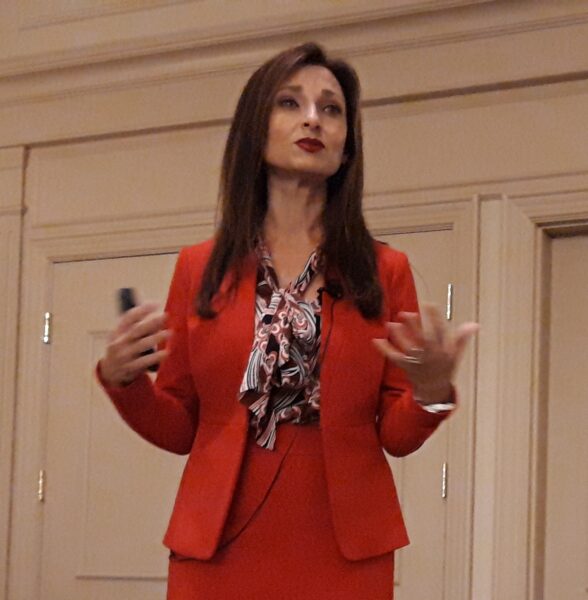
By Susan Nilson “The skull shape is going to determine the bite level. There’s a lot of stuff that goes into the amount of damage done by a bite and very little of it has to do with the dog’s ability to control himself. A dog jaw is a third order lever. This means the force is in the middle between the load and the fulcrum. This is physics 101. Dogs do not all have the same bite mechanics or bite potential…My issue with bite levels is that predictions are… Continued
Learning from Mother Nature
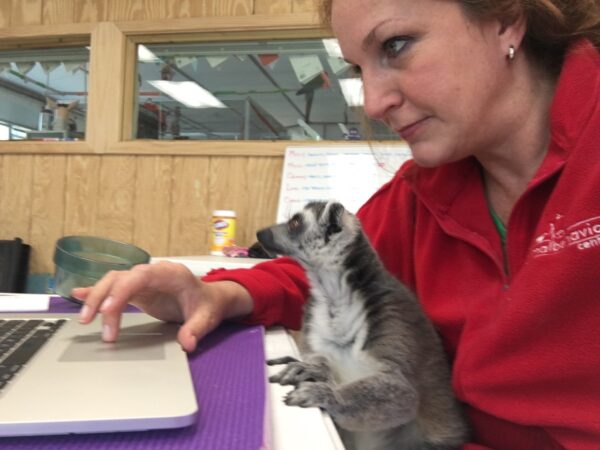
By Lara Joseph Sadly, behavior issues are skyrocketing in the realm of exotic animal care. Most of what I see is due to ongoing, stressful conditions and, often, the signs of stress are not recognized in the companion animal community or facility staff, who are not always educated appropriately. A lot of the behaviors I see are due to frustration, lack of choice, and the result of an animal not being able to control their own consequences. Read article
Saying Goodbye
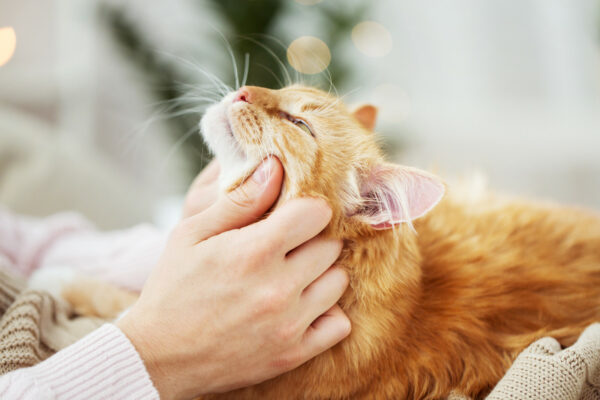
By Alicia Obando According to Tzivian et al. (2015), the loss of a pet may be “very stressful to the owner, whether these deaths were caused by euthanasia, accident, or by the progress of illness. The longer one has a pet, the greater the attachment can become, and this strong attachment may provoke a distress reaction upon a pet’s death. Many people grieve for their pets in much the same way as they do for the deaths of their friends. Families are known to experience a range of emotions in… Continued
Dealing with Dog Bite Liability
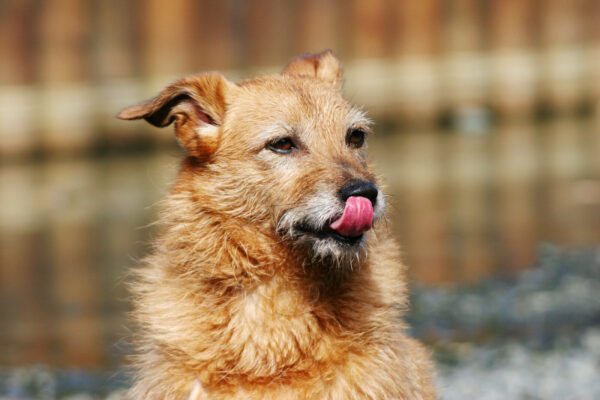
By David Pearsall As most pet professionals are aware, a general liability policy will protect you against bodily injury or property damage to others caused by your negligence (or your staff’s negligence while working for your business). Typically, a $1,000,000 liability limit is recommended. Please be aware that under most general liability policies, defense cost is outside of this limit, and the insurance company will defend you if a lawsuit is brought against you/your business. There is also a medical payments limit (typically $5,000 – $10,000) which is used to… Continued
Teaching Your Dog to “Go Say ‘Hi'”
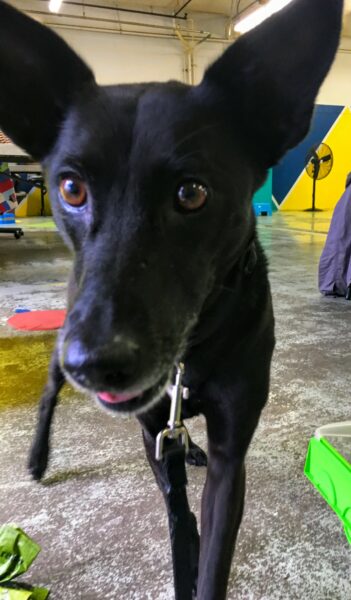
By Danette Johnston I am not a fan of dogs greeting on leash for several reasons but I do like to teach dogs a “GO SAY HI” cue for the following circumstances: Times when it may be OK for the dogs to meet on leash. For emergencies when another dog or human is approaching without consent. Therapy work. GO SAY HI is a bit of a fake-out cue. What GO SAY HI means to me (and my dogs) is: go ahead and step toward that dog/human, sniff for 1-2 seconds and then come back… Continued
June 18, 2019: New Study Examines Evolution of “Puppy Dog Eyes”
A new study has found that facial musculature between domestic dogs and gray wolves differs only around the eye. The study reports that exaggerated eyebrow facial movements in dogs cause their eyes to “appear larger, giving the face a more paedomorphic, infant-like appearance, and also resembles a movement that humans produce when they are sad.” This potentially elicits a “caregiving response from humans, giving individuals that inherit the trait a selection advantage with humans.” The researchers conclude that “the data suggest that selection—perhaps mainly unconscious—during social interactions can create selection pressures… Continued
Are Head Halters Like Prongs?
By Yvette Van Veen Are Head Halters Like Prongs? Head halters took the training world by storm years ago. Some trainers are hanging up their head halters because they simply don’t like how dogs seem to fight them. Other trainers, those who use force have long tried to make the claim that head halters are no different from prong collars. Generally, the argument made is that if you use a head halter then you really are no different from a trainer who uses prong collars. That we are in denial. That aversives are necessary. That we… Continued

Animal Trainers: Take Animal Emotions into Consideration!
By Karolina Westlund Ph.D. of PPG corporate partner Illis Animal Behaviour Consulting Is the dog fearful, or crouching? Does it matter, when you’re training? The world of animal trainers is divided, and I find that some trainers avoid the subject of animal emotions altogether. “There’s no need to factor in and understand emotions, just deal with the observable behaviour”, is the gist of what some trainers and animal professionals say. No doubt their unwillingness to consider emotions stems from the Father of Behaviourism, influential to this day. Skinner said: “The ‘emotions’ are excellent examples… Continued
June 5, 2019: NY Legislature Votes to Ban Declawing in Cats
New York lawmakers have passed a bill sponsored by Linda Rosenthal (D-Manhattan) to ban cat declawing, meaning New York State is set to become the first to outlaw the procedure. The State “joins several cities in banning declawing, including Los Angeles and Denver; several other states, including California, New Jersey and Massachusetts, are also considering bans, according to the Humane Society of United States, which hailed the New York bill.” Read article
May 31, 2019: Manitoba Vets Vote to Ban Declawing
Manitoba has become the sixth Canadian Province to ban the practice of declawing cats, a procedure that amputates the first joint of a cat’s toes. Newfoundland and Labrador and Alberta banned the practice earlier this year, while British Columbia, Prince Edward Island and Nova Scotia prohibited it in 2018. New Brunswick is expected to join them in July. Read article
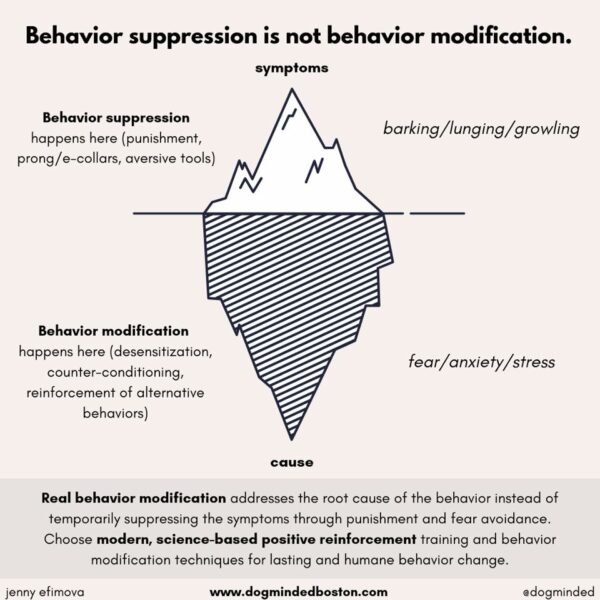
Behavior Suppression Is Not the Same as Behavior Modification
By Jenny Efimova Reactive behavior is the tip of the iceberg. It’s what we see: the lunging, the barking, the snarling, the growling, etc. It’s what’s above the surface and it’s what we often want to stop. What we don’t see and what’s driving this behavior is the rest of the iceberg below: the fear, the anxiety, the stress, the frustration. So if we want the behavior to change, we need to look at the root cause, not just the symptoms. When we change how a dog feels about a… Continued
May 16, 2019: Australian Capital Territory Overhauls Animal Welfare Legislation
Under the legislation, “[p]et shops and boarding kennels will be licensed and all pets recognised as ‘sentient beings with intrinsic value’.” In addition, confining an animal, “or even transporting it in a way which causes it injury, pain or stress, will attract a maximum penalty of $16,000 and a year’s imprisonment. An identical penalty will apply for anyone who places an electric shock device on an animal, such as a shock collar.” Read article
« Previous 1 … 16 17 18 19 20 … 29 Next »

Barks
Topics
Archives