


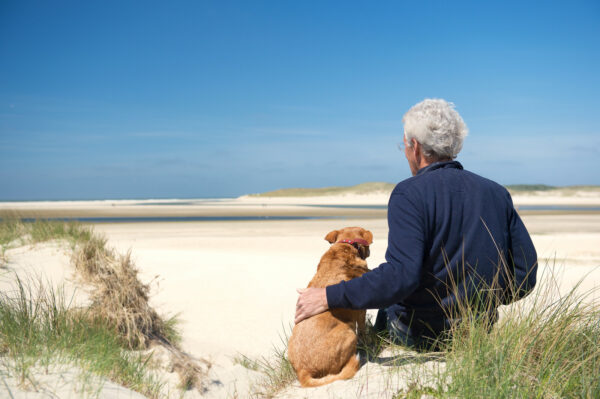
Helping Pet Families in Need
By Alicia Obando I had become quite familiar and active with the pet care and rescue organizations around my city of Chicago, Illinois. I saw that there were lots of organizations helping find homes for homeless pets. This was great work done by mostly unpaid, hard-working volunteers. Even though so many of us were working towards this cause of helping homeless pets, it seemed like it would be a never ending battle. I started thinking that maybe instead of helping the animals once they became homeless, I should try to help… Continued

Humane Education
By Stephanie Peters Humane programs that incorporate animal interaction have a profound capacity to help students on a personal level. Angel Banuelos-Price is a fifth grade teacher at Boone Middle School and she has enthusiastically welcomed my educational programs with Marmalade from the very beginning. She observes that Marmalade’s presence in her classroom reduces her students’ stress and anxiety levels, and that her attendance numbers are often higher on the days when Marmalade visits the classroom. Stacy Lehman of University Community Childcare in Ames also notes the social-emotional benefits to her… Continued

Stable Life
By Kathie Gregory In the equine world, I would say it is widely accepted that a horse may live the majority of his life in a stable, and, in my opinion, there is far less awareness concerning the impact this may have on his wellbeing. People may consider it “normal” for a horse to spend most of his time in the stable and only be brought out to do his job or to be given specific exercise subject to people’s requirements…There are numerous studies on the adverse effects of keeping horses… Continued

The “Ouch” You’ll Never Hear
By Andrea Carne …according to Bahr (2017), up until recently “it was thought cats did not experience pain at all, based purely on the fact that they tend not to show it.” In my opinion, it is safe to assume this is a major factor behind why chronic pain caused by conditions like arthritis go undiagnosed and, therefore, untreated in many older cats. This is despite several studies showing that arthritis is the number one cause of chronic pain in cats and that 90 percent of cats over the age… Continued
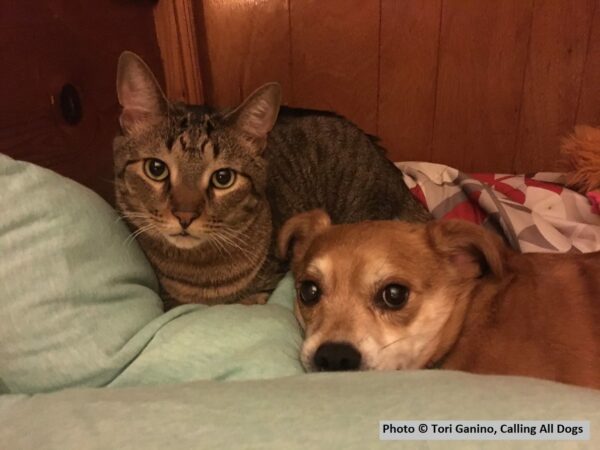
From Foes to Friends
By Tori Ganino By the end of the second week and into the beginning of the third week since arriving at our home, Jeter was spending more time out of his room. He stayed on leash and chose my bed to be one of his favorite places to relax. One evening, Si entered the room, and with Jeter’s presence on the bed unbeknownst to him, jumped on the bed and the two were suddenly nose to nose. I immediately gave Jeter the “leave it” cue which he followed. Si jumped off… Continued
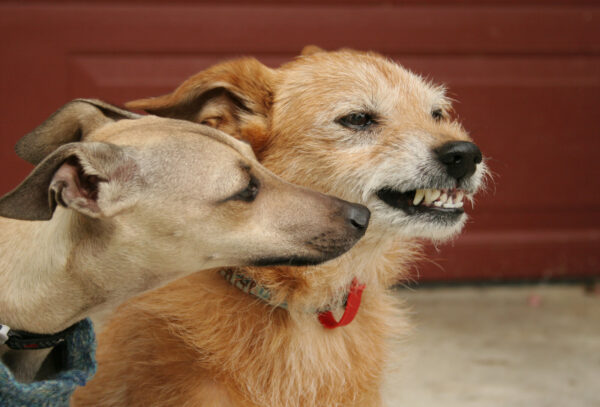
A Better Awareness of Overarousal
By Anna Bradley When mentioning “arousal” or “overarousal,” dog owners may have some idea as to their definition, but in my experience the consensus seems to be that the terms generally refer to negative trigger events. This is inaccurate, however. Arousal triggers include positive as well as negative events. Examples of positive arousal triggers may include greeting a familiar person, getting the leash out, engaging in a dog sport, or play. Examples of negative arousal triggers may include an unfamiliar person approaching the home, or going to the vet. Each dog… Continued
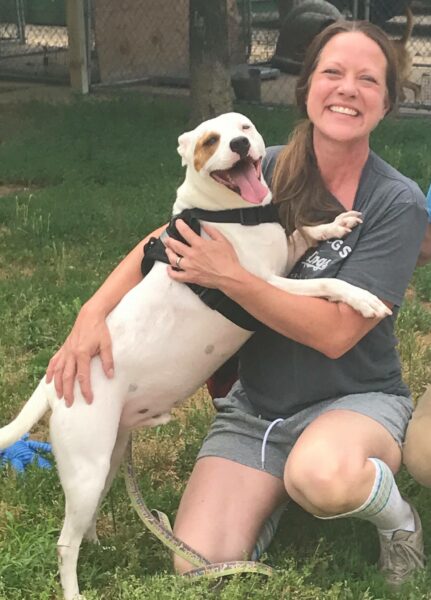
Busting the Muzzle Myth
By Rachel Brix Walking the busy streets of our small tourist town with my dog, the looks on people’s faces range from confusion, to disgust, to laughter, to disapproval, to openmouthed, wide-eyed shock. The cause? Just a dog wearing a muzzle. Let’s face it, we don’t see too many dogs in public wearing what looks, to some people at least, like some sort of medieval torture device. And when people who are not dog professionals see us, they may draw the conclusion that I’m mean, that my dog is dangerous, or something… Continued
From Zero to Hero
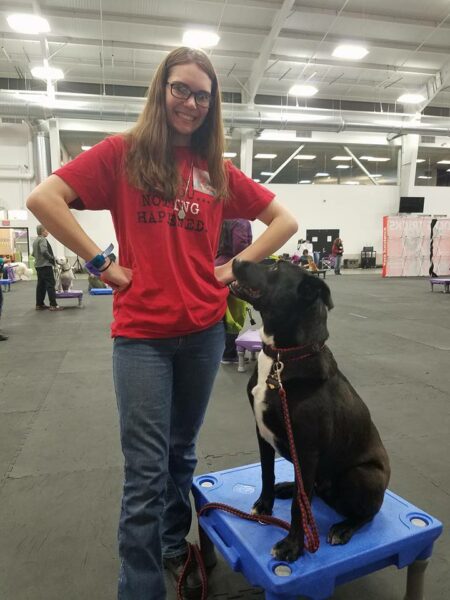
By Ariel Baber A lot of people may get annoyed when a dog wakes them up, particularly if they are woken up by him pawing at their chest and licking their face. To be honest, I’m no different. I had no idea that night why Halligan (whose registered name is Zero to Hero) was insisting I get up when he normally sleeps as long as I do. Nevertheless, I begrudgingly got up and began our normal routine of feeding him first, then checking my blood sugar and eating breakfast. It… Continued
Dog Tired? When Exercise Wakes him Up Rather than Tires Him Out!
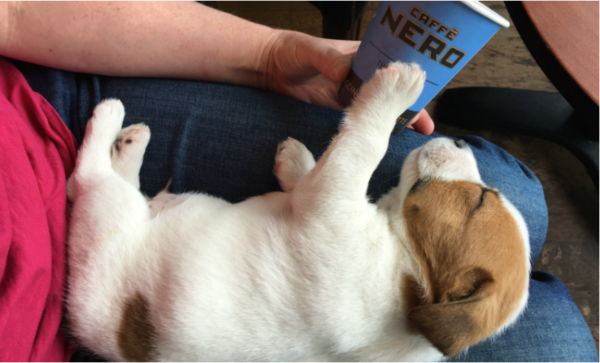
By Sue McCabe Many years ago, at a seminar in Edinburgh, I heard Patricia McConnell say that most dog walks wake the dog up, rather than tire the dog out. ‘But why is he not tired?’ I’m often asked. ‘I’ve taken him for a really long walk.’ We’re just back from a 10km walk followed by a sandwich in the sun. A good brisk march with plenty of variation from sniffing and fetching, meeting and greeting dogs and even swimming. Despite this apparent morning of stimulation, after we arrived home, Jellybean… Continued

How to Make the Transition to Full-Time Dog Pro
By Veronica Boutelle of PPG corporate partner, dogbiz If your dream is to work with dogs for a living but you’re still toiling full time outside the dog industry, or juggling a part-time business alongside your “real” job, you need a transition plan: A plan to get you from where you are now to working full-time in your own dog training or dog walking business. Here’s what should go into yours: Determine feasibility. Feasibility is a comparison of revenue to expenses. Is your business set up to make what you… Continued

How Long Does It Take to Train a Dog?
By Sue McCabe At puppy class recently, we started retrieve training. Students were shown this video (below), with the steps needed to train a reliable retrieve to hand. The video compresses quite a bit of learning (weeks of short sessions) into just under 2 minutes of demonstration. ‘How long did it take to train?’ they asked. I guess the answer is never straight forward and well, it depends. https://www.facebook.com/muttamorphosisDogTrainingandBehaviour/videos/1377284962322971/ ‘How long will it take to train my dog?’ is a common question trainers and behaviour consultants get asked. To understand what influences… Continued

April 26, 2019: Dog Owners More Likely to Meet Physical Activity Guidelines than Non-Dog Owners
A study conducted in West Cheshire, England has found that dog owners are considerably more active than people without a dog, and that dog walking is undertaken in addition to, and not instead of, other physical activities. The findings “provide support for the role of pet dogs in promoting and maintaining positive health behaviours such as walking. Without dogs, it is likely that population physical activity levels would be much lower,” say the researchers. Read study
April 22, 2019: Study Examines Canine Laterality
While some dogs are “left pawed” and some are “right pawed,” the study found that laterality did not appear to extend to canine lying/sleeping positions, as has been shown in other species. Read study

Confessions of a Dog Trainer. Part 1: Feeding from the Table!
By Sue McCabe I have a confession. I sometimes feed my dogs from the table. When I go out to eat with my dog we are sharing quality time, and a meal together. So as long as my dog is quiet and calm and settled, he gets to share my food or he gets a Kong of his own to enjoy. Below is a picture of my pup Jellybean having lunch with me at a coffee shop in Warwick Bridge, England. I don’t do this at home and since he’s never been… Continued
April 17, 2019: Study Examines Use of Normal and Abnormal Behaviors to Affect Motivational State
The study concludes that abnormal behavior usually indicates poor welfare, regardless of whether it was initially adaptive, but points out that sometimes abnormal behavior can also be functional – including to modify motivational state. This, in turn, “makes it likely that certain changes in behavior and physiology, often associated with feelings and emotions in sentient animals, will occur.” Read study
Does Your Animal Have Control?
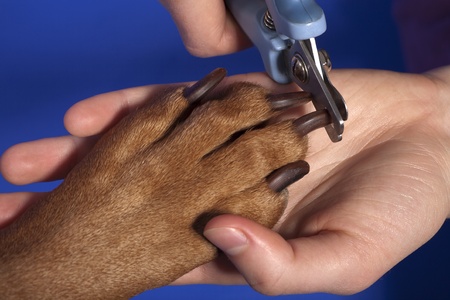
By Karolina Westlund Ph.D. of PPG corporate partner Illis Animal Behaviour Consulting Many animal trainers, veterinarians and pet owners highlight the importance of controlling animals. Controlling them, as in restricting the animals’ movement, their choices and their opportunities to control their environment through their behaviour. Sometimes you have to, for safety reasons. Obviously. But often you don’t – and more often than you might think. Actually, the trend in modern animal training is to deliberately and strategically shift control from the handler to the animal, while still staying safe. Giving control to the animal… Continued
April 15, 2019: Study Finds Emotional Mirror Neurons in the Rat
Researchers at the Netherlands Institute for Neuroscience have tested the theory of empathy in rats and found the presence of mirror-like neurons in the rat’s anterior cingulate cortex that are responsive when other rats are observed undergoing a painful or unpleasant experience. The finding suggests that observing rats shared the emotion of the other rats and, according to Prof. Christian Keysers, the lead author of the study, “…this all happens in exactly the same brain region in rats as in humans.” Read study

The Reality of TV Dog Training
By Niki Tudge and Susan Nilson In recent years, much creditable scientific study has been given to dog training and behavior modification methods and their respective efficacy and consequences. The preponderance of the evidence shown by these studies indicates that the implementation of training and/or behavior modification protocols predicated upon outdated “dominance theory” and social structures (“alpha,” or “pack leader”), usage of physical or mental force, intimidation, coercion or fear are empirically less effective and often create as a consequence “fallout” behaviors, such as fear, aggression, global suppression of behavior,… Continued

Dog Training: Why I Do It
By Joanne Ometz Eight people enter the room with five puppies. I encourage whole families to attend my puppy classes. “Let’s get everyone on the same page,” I have told them, so parents, kids, couples, and single puppy parents arrive, leading or being led by their puppies. All take their places, sitting and immediately beginning to lower treats to the floor by their young dogs, who begin to slow down, sit, or lie down, to settle. Soon, we have a room full of quiet people with puppies lying at their… Continued
April 10, 2019: New Survey to Research Cases of Shock Being Used on Pets without Owners’ Permission
In the wake of a number of recent news stories, the Pet Professional Guild Advocacy Committee is starting to collect data from pet owners who have had shock collars used on their pets without their permission. Pet owners who have experienced this are invited to complete this form.
Treats that Beat Squirrels!
By Yvette Van Veen Treats that Beat Squirrels! What if I told you that tiny little treats could beat a high level distraction like a squirrel? It doesn’t seem to make sense. The distraction is clearly more desirable than a paltry pea sized biscuit. It would be like saying that people would choose to work for a strawberry rather than sloth by the pool with a six pack of cold ones. The temptation to sip the more appealing beer holds greater value than a four calorie berry. It seems reasonable to conclude that beers would… Continued
April 8, 2019: Shock Collars to Be Banned in Netherlands Next Year
Netherlands Minister of Agriculture, Nature and Food Quality, Carola Schouten, has announced the banning of shock collars for dog training from July 1, 2020. Schouten is also introducing new rules for breeding the Bambino Sphynx cat: “Research from Utrecht University shows that the breeding of these cats is often accompanied by health and welfare problems for the animals.” Read article. In Dutch
April 4, 2019: Study Finds Cats Can Recognize Their Names
A new study, published in Scientific Reports, has investigated whether cats could differentiate their names from four other words, including those with the same length and accent as their own names and the names of other cats living in the same household or environment. The study also tested whether cats were more likely to recognize their own names when uttered by a familiar vs. unfamiliar human. Read study
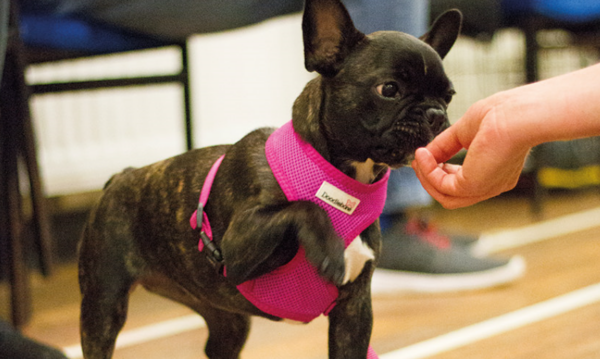
Dispelling the Myths: Tuggy, Retrieve and Safe Play
By Sue McCabe I still regularly hear from clients that they have been told they shouldn’t play tug with their dog. It causes aggression; it creates a hard mouthed dog who will damage game (if you’re into that sort of thing); you’ll never get a decent hold if you teach tug. I still hear the only way to play tug safely is to make sure the human always win the game. Would you really want to play with someone who always wins? Let’s get things straight. It is possible to play tug and allow… Continued
« Previous 1 … 17 18 19 20 21 … 29 Next »

Barks
Topics
Archives