


Book Review: How Dogs Love Us by Gregory Berns
by Daniel H. Antolec
I recently read a fascinating book written by neuroscientist, Dr. Gregory Berns, who headed the two-year Dog Project, using fMRI scanning technology to investigate the brains of dogs who were specially trained to participate in the project. Callie was his family dog, and the book not only explored the scientific method of this unique experiment, but also the personal relationship development between Berns and his dog.
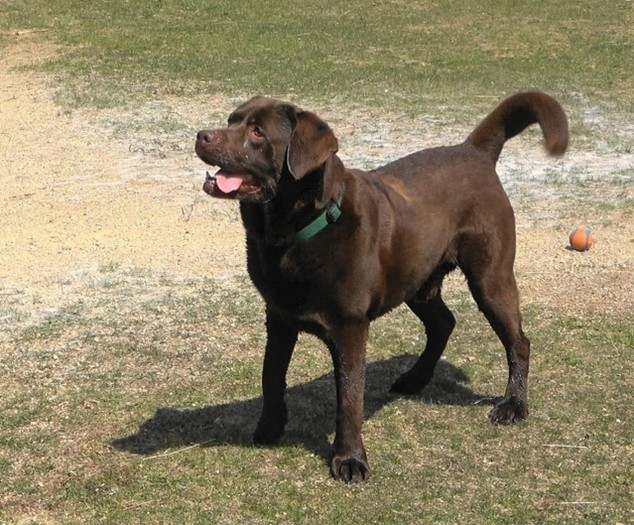
activation! Photo: Daniel H. Antolec
The book, How Dogs Love Us: A Neuroscientist and His Adopted Dog Decode the Canine Brain, is clearly written, with a good deal of humor, and simple explanations of complicated scientific concepts and methods. It helped me develop a deeper, more nuanced understanding of my own dog, and those I work with. That leads me to believe it will be beneficial to other pet stewards, who love their dogs, and would like to understand how their dogs consider their human family – how they love us.
I will not condense the 248 pages into a brief article, but I can touch upon some of the subjects that I found most moving.
The origin of the canine-human relationship is still debated, with some scientists suggesting dogs and humans began living together 32,000 years ago. Others, like Berns, suggest a more recent timeline. I grew up learning that humans domesticated dogs, perhaps by bringing wolf pups into their domain. Berns and I accept a more recent theory that dogs domesticated themselves, by choosing to live among humans.
Berns explained that dogs evolved from predatory animals, who needed to have great observational skills, and the ability to interpret the behavior of prey and anticipate their behavior. It is a matter of interspecies communication, as that is how a predator could survive.
Theory of Mind
Brain scan evidence suggests “theory of mind” which is a concept once thought to exist in the realm of humans, monkeys and apes, but no other species. On page 211 Berns wrote,
…we learned that dogs’ brains show evidence of a theory of mind for humans. This means they change their behavior based on what they think we’re thinking.
As Berns wrote on page 227,
“All predators, whether they hunt alone or in packs, had to evolve an interspecies theory of mind to be successful.” Berns continued, “Dogs are much better than apes at interspecies social cognition. Dogs easily bond with humans, cats, livestock, and pretty much any animal.”
Interspecies Communication
Dogs also follow human eye gaze and hand gestures, better than chimpanzees. That attention to human gaze and movements would have enabled primitive dogs to cooperate with human hunter-gatherers and continues to enable modern dogs to easily learn what humans teach them.
Dogs are a highly successful species, numbering about 700 million worldwide, living virtually everywhere humans live. That requires intelligence and flexible adaptation.
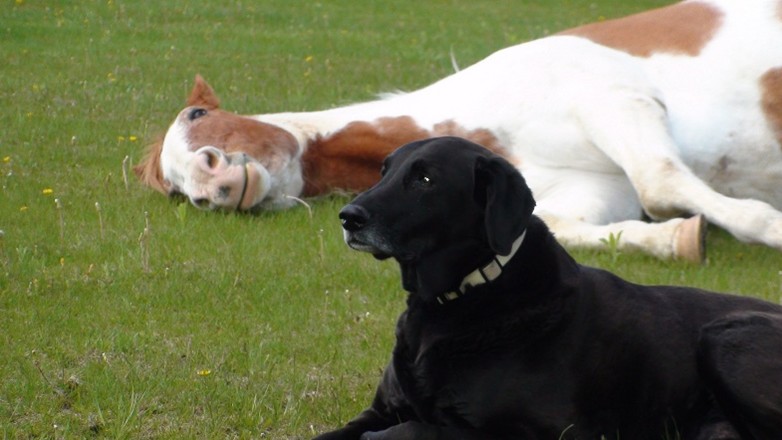
Photo: Daniel H. Antolec
This concept made me think about my Labrador, Bruno, and his interspecies communication with me. Recently, a friend brought their Welsh terrier to stay with us for one week. Bruno and Rocket met before, but hadn’t seen each other for several months. As I waited for our friend to arrive, Bruno and I settled on the porch while I read the last chapters of How Dogs Love Us. We had engaged in that same morning pattern for about 10 days, so it was not a unique experience for him.
Over the course of about 90 minutes, while I read , I occasionally put down the book and looked to my left, down the driveway, to see if my friend had arrived. Bruno was resting at my feet, as usual, paying attention to my behavior.
When I resumed reading, I observed on several occasions that Bruno stood up, looked down the driveway with a focused gaze, and appeared to be expecting…or anticipating something. In all the prior days when I read the book while on the porch, he never behaved like that.
Sure enough, he was the first to notice the arrival of my friend, and his doggy friend. I had just been reading about the brain scan evidence of canine theory of mind for humans and seemed to have witnessed it firsthand.
Advanced Cognitive and Social Development
The weekend doggy playdates that we have hosted for years also seem to exemplify this concept. My daily morning routine is to clean the horse barn while Bruno tags along, fetching a ball and then poking his way about the two-acre paddock. His behavior changes only on the designated playdate days, when he observes me for a while, and then frequently freezes, staring down the driveway for several seconds, as though he anticipates something. Sure enough, our first guest arrives, and play begins.
Brain scans of dogs confirmed activation of the caudate nucleus, a region in the brain associated with happy expectation. I think that Bruno expects his doggy friends to arrive only on those dates when a play activity is planned. He is not psychic; he is an expert at watching me and interpreting what I am doing, such as preparing the barnyard for a playdate. His brain must be generating an image of the coming reward: play.
The significance of theory of mind is that it requires advanced cognitive and social development of a sentient being. In turn, that shapes our relationship with the dogs who share their lives with us. They have a full range of emotions, and active, intelligent minds.
In the final pages, Berns stated the Dog Project had taught him how to communicate better. On page 232 he wrote,
The dogs were watching us, trying to figure out what we were thinking and how to shape their own behavior to fit in. Consistency and clarity. That was the ticket. I resolved to be more consistent – with both dogs and humans alike.
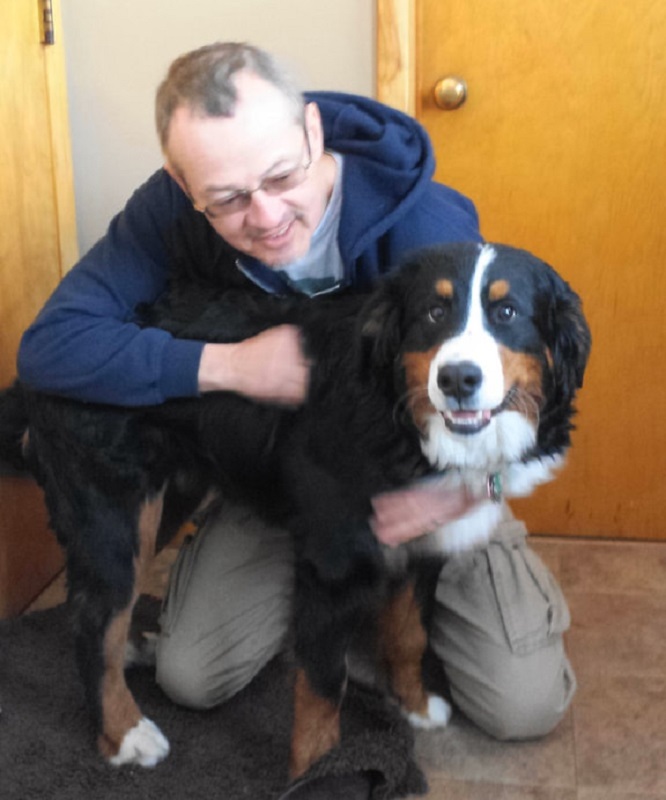
About the Reviewer
Daniel H. Antolec, PCT-A, CCBC-KA, CPDT-KA began teaching dogs in 2011 and founded Happy Buddha Dog Training. He teaches dogs in a way that makes it fun for pet stewards and pets alike.
How Dogs Love Us: A Neuroscientist and His Adopted Dog Decode the Canine Brain
Author: Gregory Berns, M.D. / Ph.D. (2013)
Publisher: New Harvest

Barks
Topics
Archives