


Help Pets Avoid These Common Hazards
by Don Hanson
Tobacco & Nicotine
Although not found in every home, tobacco and tobacco cessation products that contain nicotine can, sadly, be commonly found in the environment.
The nicotine in tobacco and smoking cessation products can kill a pet.
Nicotine is a psychoactive and highly addictive substance found naturally in tobacco. Tobacco products are a nicotine delivery system. These products include cigarettes, cigars, pipe tobacco, chewing tobacco, and snuff.
Since the advent of e-cigarettes and vape pens, humans can now ingest nicotine without ingesting tobacco. Additionally, most smoking cessation products, such as gum, lozenges, inhalers, nasal sprays, and patches, also include nicotine.
There is no antidote for nicotine poisoning, so immediate veterinary care is mandatory. Pets can and have died from nicotine poisoning.
Your dog’s reaction to nicotine ingestion depends on what is ingested and the weight of your pet. Smaller dogs are more susceptible to nicotine poisoning. Items with the highest nicotine concentration are the most dangerous, and they include cigars, vaping pods, e-juice, and nicotine patches. These products should be secured so a child or pet cannot access them.
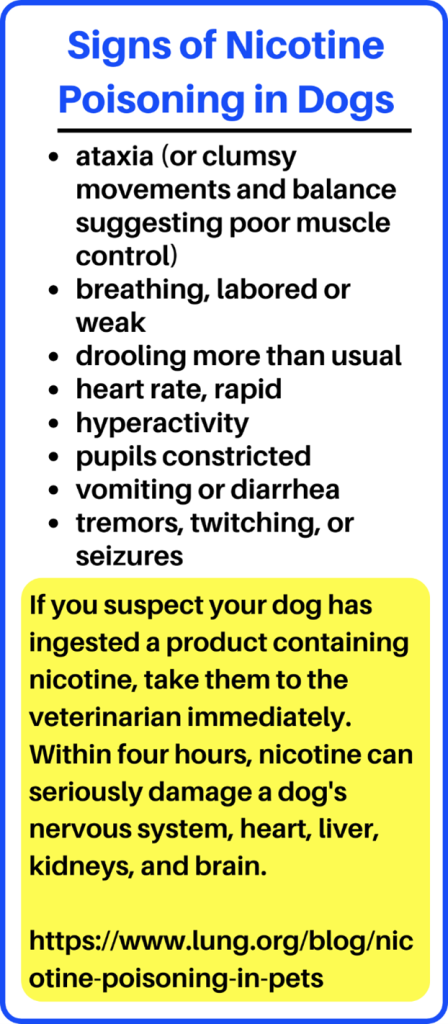
Please be aware of the symptoms your pet could exhibit if they ingest nicotine or tobacco in any form.
According to the American Lung Association, signs of nicotine poisoning in pets can include, but are not limited to, lack of coordination, labored or weak breathing, excessive drooling, pinpoint pupils, hyperactivity, vomiting or diarrhea, tremors or seizures.
What Can You Do?
Watch your pets closely when outdoors, as discarded tobacco products or smoking cessation products might be found on the ground and even remnants can pose a serious risk to pets.
Again, if you have any of these items in your home, please ensure they are secured so that pets and children cannot get to them.
Marijuana & THC
Marijuana, or cannabis, has been used as a recreational drug and for medical purposes for many years. In the past several years, it’s use has become legal in many states. While your dog may not find marijuana in your home, they may encounter it outdoors, on a walk, or in a park.
The THC in marijuana edibles and smokables can kill a pet.
In 2022, a study published in PLOS ONE reported,
“…a 448% increase in reports of cannabis poisoning cases in companion animals in the United States (USA) and Canada. The Animal Poison Control Center has also reported a 765% increase in calls regarding pets ingesting cannabis in 2019 compared to the previous year.”
Tetrahydrocannabinol, or THC, is the psychoactive (causes a high) component of marijuana that is toxic to pets. As growers create strains with increasingly higher levels of THC, potential exposure becomes a more significant problem. Edible products often include higher levels of THC, and their ingestion by a pet is typically more severe.
Clients and other pet care professionals have shared the following with me:
Case 1 – A puppy walked on trails and ingested the remains of a joint disposed of along the trail twice. Both times, the puppy exhibited symptoms and required emergency treatment at a veterinary ER.
Case 2 – A pet parent observed a puppy exhibiting signs of THC toxicity and was advised to bring the pup into the veterinary ER, where they were treated and recovered. What the puppy ingested or where they obtained it is unclear.
Case 3 – An individual in the marijuana industry was processing marijuana for a product they were making to sell. The waste from the process was disposed of in a compost pile where their dog found it, consumed some, and exhibited signs of severe toxicity. Despite the work of the dog’s veterinarian, the dog did not survive.
What Can You Do?
If you have any THC-containing items in your home, please ensure they are secured so that pets and children cannot get to them. Watch your pets, especially puppies, closely when outdoors, as these items might be found on the ground during a walk or in a park.
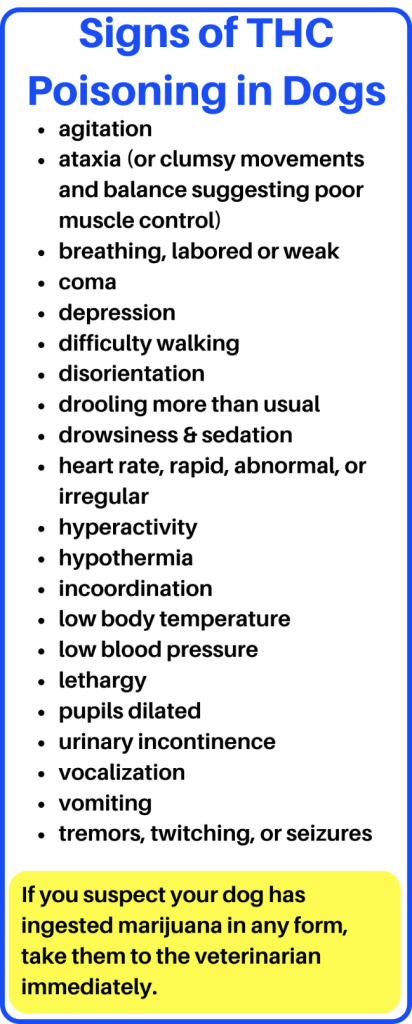
Please be aware of the symptoms your pet could exhibit if they ingest marijuana in any form. Signs of THC poisoning in pets can include, but are not limited to, agitation, loss of balance or coordination, labored or weak breathing, disorientation, increased drooling, lethargy, hyperactivity, dilated (big) pupils, vocalization, vomiting, tremors or seizures.
If you suspect your pet has ingested any tobacco-contatining or marijuana-containing product, take them to the vet immediately.
About the Author

Don Hanson lives in Bangor, Maine, where he is the co-owner of the Green Acres Kennel Shop and the founder of ForceFreePets.com , an online educational resource for people with dogs and cats. He is a Professional Canine Behavior Consultant (PCBC-A) accredited by the Pet Professional Accreditation Board (PPAB) and a Bach Foundation Registered Animal Practitioner (BFRAP) .
A Pet Professional Guild (PPG) member, Don serves on the Board of Directors and Steering Committee and chairs the Advocacy Task Force and Shock-Free Coalition. He is also a founding director of Pet Industry Advocacy International (PIAI).
The opinions in this article are those of Don Hanson.
©2026, Donald J. Hanson, All Rights Reserved

Pets and Their People Blog
Topics
Archives