


How to Walk with Your Dog
by Laurel Saville
Excerpt from her book “How to Live with a Dog, stories and solutions for humans with dog problems and dogs with human problems.”
A lot of the calls I get are from people who are upset, often really upset, about their dog pulling on the leash. These people are aggravated, embarrassed, afraid of getting thrown off balance and falling down. It’s such a common issue that almost every contraption we put on a dog’s head or neck, including all the ones that create pain and discomfort, promises to stop dogs from straining against their leash. In reality, few of these harnesses and halters fix the problem. Why? Because leash tugging isn’t a dog problem, it’s a human problem.
When I meet with someone who has been in a long-term tug-of-war with their dog, I find they often need to complain about their dog for a bit. Sometimes they just want to tell me what walking their dog is like. Other times they want to show me just how “bad” their dog is. They put the dog on a leash and race out the door. The dog drops his attention to the ground for sniffing, while the human starts scanning the neighborhood in case there are other people around who might witness their struggles. Often, they’ll give the leash a really hard yank as a sort of preemptive strike against the dog’s pulling or just to show the neighbor that they’re doing something about their out-of-control dog.
I hate seeing this. It pains me. Both dog and human are and have been suffering unnecessarily. The fix to this seemingly intractable problem is actually quite pleasant to implement. I ask for the leash. I call the dog to me and give him a few treats, slowly, with big gaps, a few encouraging words, and some affection filling the space in between the food. I do this because I’ve just met this dog five minutes ago. He doesn’t have any knowledge of me, no relationship with me, and yet I’m about to ask him to trust me, follow me—essentially, dance with me. The treats are a way to say hello, establish a connection, to let him know that I understand social conventions. It’s like bringing a bottle of wine or baguette when someone you’ve recently met invites you over for dinner. I also want this dog to know my intentions are friendly and I might be worth paying attention to. I use this time to explain what I’m about to do to this dog’s human, who is standing there, arms crossed over her chest, a skeptical expression planted on her face. I don’t know if she’s doubting my ability or her dog’s, but I’m confident we will both win her over.
“Dogs tug because humans tug,” I say.
I wait a moment to let that sink in. I realize that this small sentence requires a very large shift in perspective.
“Dogs learn to tug from us. You want your dog to go this way, you tug the leash this way. You want him to come back to your side, you reel him in by pulling on the leash. You yank to get your dog to go where you want to go, so your dog yanks to get where he wants to go.”
I can sense the wheels are starting to turn in the human’s head.
“If you want him to stop tugging, you have to stop tugging.” She nods, then throws up her arms in exasperation.
“How?” she asks.
“I’ll show you,” I reply.
The first thing I do is clip on a longer leash, usually about eight to ten feet, depending on how much space we have to work with. The typical walking-around-the-block leash is about six feet long. This is too short. It doesn’t give you more control. In fact, a six-foot leash restricts a dog’s movement so much it often creates frustration, which leads to more tugging. I want a dog to want to walk with me. I also want to make sure the dog gets a nice walk and his needs met. That requires giving him some freedom to move around and make choices. Once a dog understands how to walk together without tugging, he won’t tug no matter how long or short the leash is. I gather up some of the slack in the leash. I put a few treats in my hand. The dog sits down and gives me a questioning look. He’s wondering why the treats are staying in my hand and what he might do to get them moving to his mouth once again. I step to his side so our bodies are lined up. I say his name in an upbeat tone of voice. We look at each other.
“Ready?” I ask him.
He is.
“Let’s go!” I say, and step forward decisively.
The dog lags a second, trying to figure out what’s going on, so I wave my treat-filled hand in front of his face and lure him to my side where I want him to walk. He catches on quickly, positions himself correctly, and trots at my side, looking back and forth from my hand to my face. To inform him that he’s making the right choice and to show my appreciation for his willingness to play this game with me, I make a bit of a fuss over him and tell him with encouraging words what a great job he’s doing. I give him a reward right to his mouth, so he doesn’t change position.
After about a dozen strides forward, I say his name again, quickly followed by, “This way!” I immediately turn 180 degrees and stride off decisively in the other direction. It takes him a moment to track my sudden change of direction, but the leash is long, loose, and light so he doesn’t hit any resistance while he catches up. I dole out and take up the slack as necessary in the leash or let it drag on the ground so it’s never taut. Again, I keep his attention on me and let him know how awesome he is with encouragement, affection, and an occasional food reward. I do a “this way” quick turn a few more times, and each time he tracks me more closely. Then I relax, slow down, and let the dog wander away from my side. Just before he gets to the end of the leash, I call his name, say “this way,” turn, pat my leg, and move off in a new direction. This lets him practice bringing his attention back to me before he gets to the end of the leash.
I shoot a glance at his human. Her arms hang at her sides and her expression is blank with disbelief.
I stop. The dog stops. We look at each other. He considers his options and sits. I immediately say an enthusiastic “Yes!” and give him a reward. In this way, I’m teaching him that when I stop, I want him to stop, too. I don’t have to tell him to sit. My body position itself becomes the cue to sit.
The dog looks at me with a “What now?” expression. I toss a treat several feet away and say, “Go sniff.” He moves off after the treat, and I immediately follow so there’s no tension on the leash. He keeps going, following his nose to a bush, and I go along with him. I am giving him the chance to lead our walk, to ask for and get what he wants from being outside, which is generally doing some solid investigating of the scents that have been left behind since the last time he was out here. After he’s had a few moments of sniffing, when I sense he’s about to turn his attention to something new, I say his name and “Let’s go!” He looks up at me for a second and goes back to sniffing. That’s okay. He’s telling me he’s not quite done. He’s not being disobedient, he’s just asking for a few more sniffs. I let him have them. After another moment, I make my request, again. The dog keeps his nose in the mulch. This is where it is tempting to “let him know you mean it” by snapping the leash. Instead, I step up to him, show him a treat, say his name to get his attention, then say, “All done!” and lure him back to our walk. Once we’ve put a little distance between us and the bush, I give him a treat to thank him for leaving something that was obviously very interesting to him and coming with me instead. Then, I stop. Then, he stops. And then he thinks and offers me a sit. I thank and reward him.
I’ve been narrating what I was doing as I did it. I ask his human if it makes sense. She nods.
“If you practice this for a few minutes before you head out on a regular, point-to-point walk,” I tell her, “he’ll continue to be more connected to you. But you have to stay connected to him. With your voice. Not with the leash.”
She still looks a little unconvinced.
“Think of a time when you’ve been out walking with a friend,” I continue. “Let’s say she’s a stop-and-smell-the-roses hiker and you’re a get-to-the-summit-and-back-for-a-beer hiker. If she pauses to pick blueberries or examine a butterfly and you’re getting antsy, would you do this . . .?”
I grab the sleeve of her shirt and tug on it.
She laughs nervously and shakes her head, no, of course not.
“Of course not,” I go on. “You’d say, nicely, ‘Hey, let’s get going.’ And if your friend took a little longer in that spot in spite of your desire to get moving because she wanted to take a picture, you wouldn’t pinch her arm to make your point more definitive. You’d wait for her to finish, or you might try and coax her along with the promise of riper berries or a big view ahead. You can do the same thing with your dog.”
I tell her that all those phrases I used, like “this way” and “all done,” are what I call “soft cues.” I use them to tell a dog what I’m going to do so he can follow along. I suggest she use whatever phrases come naturally to her and use them consistently, so her soft cues become predictive and predictable. I encourage her to use her body movement and words to let her dog know what she’s doing, what she’s about to do, and what she’d like him to do in response. I wave the leash at her.
“Emergency brake,” I say, gesturing, “not steering wheel.”
I hand over the leash and off they go. After about twenty minutes of coaching, the dog and human are moving together like dance partners. They are having a conversation of give-and-take instead of push-and-pull. No matter how many times I witness this transformation, it never ceases to make me emotional. Often, this change in walking together becomes a catalyst for far bigger and even better changes in working together overall.
Sally contacted me because her large, powerful chocolate lab, Zeke was, she told me, a committed, interminable leash tugger. She’d grown afraid to walk him. Other trainers had told her a prong collar was the only way she’d get control. She took their advice, and it helped at first, a little, but she didn’t feel good about using the prong, and it seemed to be getting less and less effective.
This is what often happens when you use compulsion instead of choice to get behavior change. The creature with less power can become inured to whatever force is being applied, so the creature with more power has to become more forceful to get the same effect. It’s a terrible spiral.
Zeke was also becoming reactive to other dogs, lunging and barking at them, since Sally started using the prong collar. This happens because a dog already frustrated or fearful of unfamiliar dogs now associates their appearance with the pain of the new collar, making them even more fearful and frustrated. Walking became a battle, which was stressful, unsatisfying, and frustrating for them both. Sally began venting her aggravation at her spouse. Zeke had already begun redirecting his toward other dogs.
I went through my loose-leash walking routine with Zeke. He was perfect, a performance made even more impressive by the fact that, lacking a long line, we did it all with no leash whatsoever. I didn’t need to make Zeke do anything. I just made walking with me interesting, relaxing, and rewarding. I coached Sally through the process, they did well together, and she said she’d be in touch soon for a follow-up. A few months later, she contacted me again. I met her at a park, and she told me that she hadn’t worked on the loose-leash walking at all until a week ago when she figured she better get ready for our lesson. Since then, she’d spent about five minutes a day practicing. She was leashing Zeke up as she told me this, grinning from ear to ear. She repeated “just five minutes a day” as she released him from the car and pranced down the path with him in perfectly fluid, functional sync.
“Can you believe it?” she called over her shoulder.
Well, yes, I could.
Zeke’s tail was up, he regularly and voluntarily checked in with her, and happily tracked her movements. Sally was also responsive to Zeke’s requests to go over here to sniff at this and to pause for a moment so he could look at that. No tugging from either of them. Not even when she switched to a ten-foot leash and not when other dogs appeared.
She also reported, and I could see, that Zeke was more assured, relaxed, and friendly overall. And so was Sally. A year later I got a note from her. She wrote that she wanted me to know that they’d kept up the work. She sent videos of Zeke strolling jauntily at her side. She said they even walked on busy roads, which used to frighten her.
“He’s more confident and less stressed,” she wrote. “We are so much more connected. It’s made a world of difference in our lives.”
One week. Five minutes a day. Half an hour cumulative time. Total transformation in the dog, the human, and their life together.
‘How to Live with a Dog: stories and solutions for humans with dog problems and dogs with human problems’ is available where you purchase books. Read reviews here.
About the Author
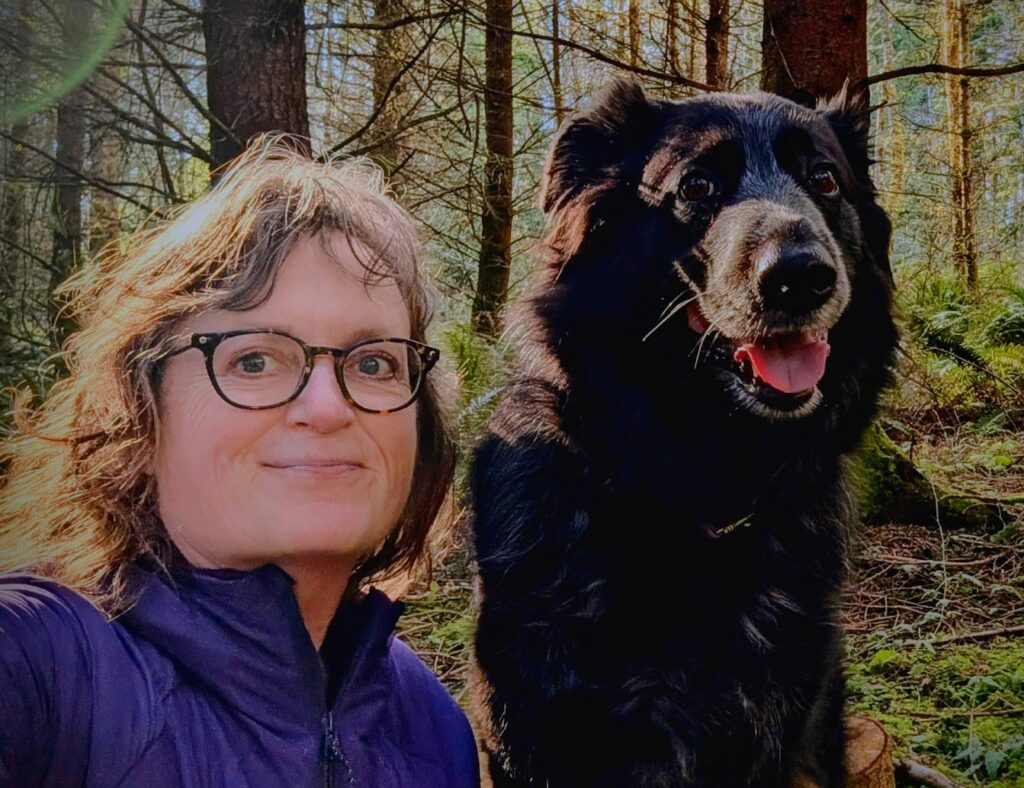
Laurel Saville, MFA, CPDT-KA, UW-AAB is a writer and certified dog trainer and behavior consultant. She lives in the Pacific Northwest, where she and her dog Willow spend a lot of time in the mossy woods looking for truffles and waterfalls.
She is the author of many articles, essays, stories, and books. Her most recent, from which this article was excerpted is, ‘How to Live with a Dog: stories and solutions for humans with dog problems and dogs with human problems’ a collection of essays that explore her most inspiring, informative, instructive, heart-rending, humorous, relatable, real-life experiences helping humans and dogs understand each other.
- How to Live with a Dog: Stories and Solutions for Humans with Dog Problems and Dogs with Human Problems
- Author: Laurel Saville
- Publisher: Urano Publishing (May 5, 2026)
- Length: 256 pages
- ISBN13: 9781953027474

Pets and Their People Blog
Topics
Archives