

Pushy Equid? Here Are 10 Tips to Keep Positive Reinforcement Training Safe and Fun for Everyone!
by Michelle Martiya
We have a growing body of knowledge proving that horses trained utilizing positive reinforcement learn faster, learn more complex skills, and are safer to work with than their counterparts trained using forceful methods.
So, how do we prevent undesirable behaviors when training horses (and other equids) with food? Set yourself and your learner up for success by checking each of the items on the list below.
Pushy Equid Checklist
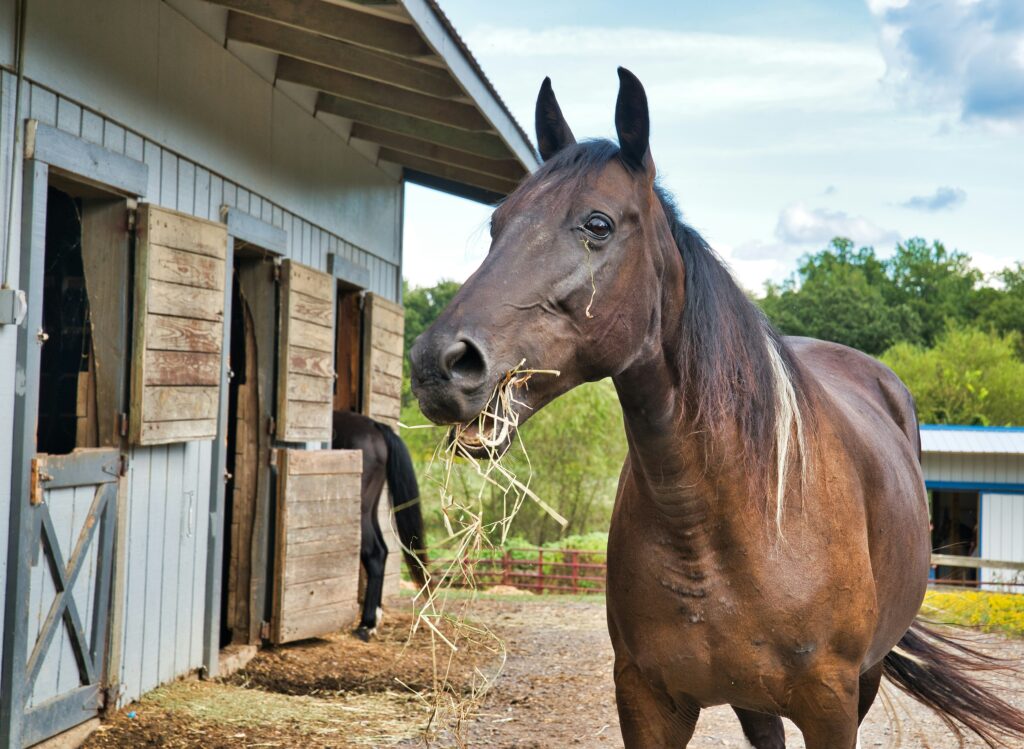
- Is your equid hungry? It’s difficult to learn when you’re feeling hungry, so make sure your equid has had some hay, at least, before you begin training.
- Is your equid’s only option the food in your hand? When the food in your hand is the only option, your equid may feel anxious or frustrated if they cannot easily access it. Having free food available during training will help reduce this.
- Have you set up the training environment to ensure success? Introducing hand feeding with a barrier between you and your equid will limit their behavioral options, helping them learn the behaviors you want faster and with less frustration, while also keeping both you and them safe.
- Are you feeding your equid enough? If your equid is nipping your hand, they may be struggling to pick up the food. Try feeding larger handfuls and gently press your hand upwards against their lips as they take the food.
- Is the value of the food too high? Choose a food that is valuable enough for your equid to work for but not so valuable that it creates frustration. Most equids will work for pelleted hay or similar and do not need sugary commercial treats during training.
- Is the behavior you’re asking for too challenging? If the behavior is too difficult for your equid, they may get frustrated due to the lack of reinforcement. Try reinforcing more frequently for less challenging behavior.
- Are you feeding too close to your body? Feeding close to your body often encourages equids to search for food on your person. Instead, try feeding consistently at arm’s length from your body.
- Are you moving your feeding hand before or at the same time that you click? If you reach for the food or have your hand in your food pouch while waiting for your equid to perform, they may become confused or frustrated because they expect you to deliver the food when they see your hand move. Make sure that your food delivery is clear by remaining still until after you’ve clicked.
- Is your equid moving too close to you after the click? Sometimes our equids move closer to us or bring their noses closer when they hear the click, anticipating food. Use where you deliver the reinforcement to help your equid learn that the food comes to them, so they don’t need to move to it.
- Is your equid chasing after you when you try to end the session and leave? Create a clear end-of-session cue and leave your equid with an activity or extra food on the ground or in a bucket to eat while you make your exit.
By giving voice to equids—and the people who work with them—we open a door to the complex, rich emotional worlds of our equids. We give them better lives.
About the Author

Michelle Martiya is an ABI (Animal Behavior Institute) certified exotic animal trainer who works with canines, equids, and exotic species. Michelle specializes in connecting and building relationships with fearful and feral equids, combining her natural ”way” with animals and her many years of experience, with a robust education in animal behavior and training. Michelle’s animal experience includes both domestic and exotic species, and she currently coaches people in training their animals through video conferencing and other virtual media through her company Essential Animal Training.
Download Your Checklist Here

Pets and Their People Blog
Topics
Archives