

Your Guide to Introducing Equids to Each Other
by Michelle Martiya, Jessica Gonzalez, and Abigail Greenwalt
From selecting herd mates to knowing when to intervene if conflicts arise, equid introductions require planning, flexibility and, as always, an equid-considerate approach. The checklist below can help guide the process.
A Checklist for Introducing Equids to Each Other
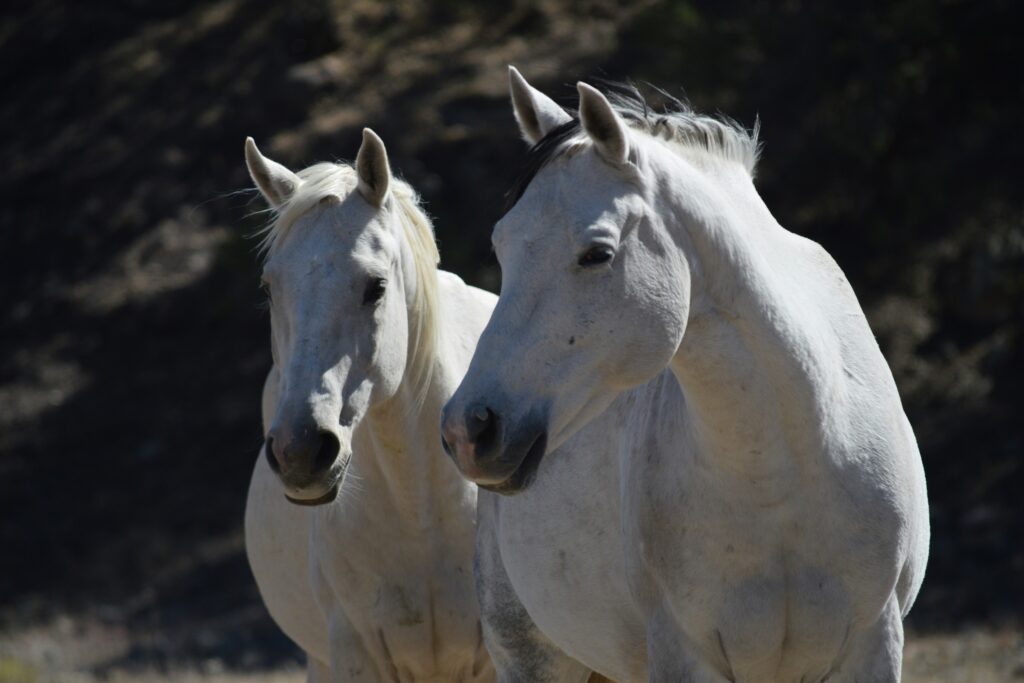
- Consider the individual: Choose herd mates based on personality, age, gender, health, size differences, and experience with other horses. Special considerations should be given to elderly horses, horses with mobility issues, and horses with little to no experience or negative experiences with other horses.
- Walk through: If possible, walk the new equid along the entire fenceline of their new pasture or paddock, with no other equids present, to familiarize them with the space. If it’s not possible to remove the resident equids from the space, walk the new equid around the outside of the fenceline.
- Fenceline greetings: If possible, allow a period where the new equid can see and/or interact with their future pasture-mates over a fenceline for at least a few days in advance of being turned out together.
- Allow space: Making introductions in a space large enough for the equids to escape each other, but not so large that you can’t catch and separate them, if necessary, is ideal.
- Safety first: Be aware of areas where equids may get trapped, such as between buildings and trees, or between buildings and fences. Keep resources away from these tight areas and place them where movement flows freely instead.
- Have a plan: Prepare a strategy appropriate for your space and equids, so that if something goes wrong, everyone will know what to do. For the first few hours together, watch carefully and have halters, lead ropes, and feed buckets readily available to quickly separate equids should excessive conflict arise.
- Plentiful resources: Provide more than one shelter, multiple water points, and more hay piles or feeders than equids in the space to avoid conflict over resources. Keep in mind that things like shade, fans, and bedding are often valuable resources for equids.
- Adapt: Plan your day of introductions for a day when it’s calm and quiet at the barn. If it’s windy, raining, there’s more commotion than usual at the barn, or the resident equids are being extra wild, consider postponing for another day.
- Recognize signs of conflict: Brief displays of threatening behavior and resource guarding with minimal contact are common, but intervention is needed when there is relentless one-sided chasing, prolonged resource blocking, or intent to injure.
Are you an equid guardian who embraces the science of equid emotion, learning and behavior? Find informative articles about equid management, care, training, social relationships and more, here.
Download Your Equid Introduction Checklist:
About the Equid Division of the Pet Professional Guild

We focus on all things equid. Under Equid Articles, you’ll find informative articles about equid management, social relationships and structure, and more, as well as PPG’s position statements related to equid training and care.
In 2020, we rolled out a project called Horses With Voices. It is a movement, a paradigm shift within the equid world, with the goals to:
- Empower equids by giving them a voice in their care and training.
- Empower equid enthusiasts worldwide to adopt more equid-considerate approaches in caring for their equids.
- Empower every equid guardian to embrace the science of equid emotion, learning and behavior.

Pets and Their People Blog
Topics
Archives