

Beyond the Session: Why Behavior Doesn’t Transfer – and How to Fix It with Louise Stapleton-Frappell

Webinar Description
A behavior that appears reliable in training does not always transfer to real-world environments. Dogs who respond fluently at home may struggle outdoors, around distractions, or in unfamiliar settings. This is not inconsistency or a lack of willingness; it is a predictable outcome of how learning, context, and emotion interact.
In this engaging session, Louise Stapleton-Frappell explores why behavior does not automatically transfer across contexts and what professionals can do to build reliability beyond the training session. The webinar clarifies the roles of generalization and discrimination, examines how stimulus control is shaped by environmental variables, and highlights the impact of competing reinforcers and emotional state on performance.
Participants will discover why traditional proofing approaches often fall short, how reinforcement histories influence behavior across contexts, and why emotional safety and predictability are essential for successful generalization. Through practical examples and applied case study discussion, attendees will learn how to analyze behavior breakdowns and design effective, force-free training plans.
Designed for trainers and pet professionals seeking more consistent, durable results, this webinar provides a clear framework for analyzing behavior and building training that truly works in the real world.
Learning Objectives
By the end of this presentation, participants will be able to:
- Explain why behavior does not automatically generalize across contexts, including the role of stimulus control and environmental cues.
- Differentiate between generalization and discrimination, and describe how both processes contribute to reliable behavior in applied settings.
- Identify common barriers to behavior transfer, including competing reinforcers, changes in reinforcement history, and the impact of emotional state on performance.
- Analyze behavior breakdowns using a functional approach to determine whether challenges reflect a skill deficit, a stimulus control issue, or an emotional constraint.
- Apply force-free strategies to support generalization, including the use of gradual exposure, antecedent arrangement, and reinforcement planning.
- Design training plans that build behavior across environments, moving systematically from controlled conditions to real-world complexity.
- Interpret changes in behavior as a function of context, reinforcement history, and emotional variables.
- Apply concepts to real-world case examples in order to evaluate training challenges and develop effective intervention strategies.
Your Presenters-Louise Stapleton-Frappell
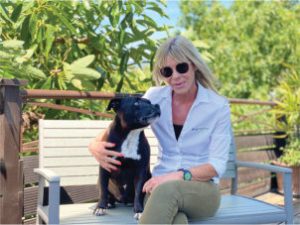 Louise Stapleton-Frappell – B.A. Hons, PCT- A, PCBC-A, CAP3, CTDI, DN-FSG2, DN-CPCT, CWRI
Louise is a Partner and Faculty Member of DogNostics Career Center and Board Member of The Pet Professional Guild. Louise has constantly built on her knowledge and furthered her education in the field of force-free, rewards-based, science-based pet training. The creator of the DogNostics’ Dog Trainer Certification Program, Louise has presented at conferences internationally and has gained a reputation for expertly teaching and training humans and canines at her own establishment, The DogSmith of Estepona, in Southern Spain, where she offers a wide range of both group and private classes and pet dog services.
PPG Members
PPG Members, use your $10.00 discount coupon code at registration to access your membership rate. The code can be found in your membership area.
Not yet a member? Click here to join and begin receiving discounts on PPG member events.
Bookings
Log in if you already have an account with us.