

The Language of Dog Training: It’s Not Just Semantics
by Louise Stapleton-Frappell
Originally published in BARKS from the Guild (Stapleton-Frappell, 2015). Updated and expanded for 2026 with current perspectives from DogNostics Education.
Why Do Semantics Matter?
The language we use shapes ethics, learning, and relationships in modern force-free training.
According to the Britannica Dictionary, semantics is
“the study of the meanings of words and phrases in language, and how those meanings shift depending on context.”
In dog training, semantics matter because the words we choose don’t just describe what we do; they reveal how we think about and relate to dogs.
So, the words we use when we teach and communicate with clients matter just as much as the methods we use with dogs.
When we talk about “fixing behavior,” it implies something broken. When we say “helping a dog feel comfortable” or “teaching alternative skills,” it reframes the challenge as one of support and growth.
For example:
- “Let’s help your dog feel safe around visitors” is kinder — and more accurate — than “Let’s correct his reactivity.”
- “Teach” and “guide” convey partnership; “make” and “force” imply opposition.
Every phrase shapes how guardians perceive training and how dogs experience it. Language isn’t only about communication — it’s about compassion.
The Power of Language in Practice
Understanding how we talk about training is one thing; applying that awareness in real-life practice is another.
The Pet Professional Guild (PPG) continues to promote ethical, evidence-based practices, encouraging trainers to use methods that protect both the dog’s welfare and the learner’s autonomy.
Two models that reflect this philosophy are the LIFE model and the Hierarchy of Dog Needs (HDN) — both recognized within PPG’s Best Practice framework.
- LIFE (Least Inhibitive, Functionally Effective), developed by Dr. Eduardo Fernandez, highlights the importance of increasing choices rather than limiting them. It reminds us that “effective” isn’t enough — methods must also be humane, respectful, and functional for both learner and teacher.
- The Hierarchy of Dog Needs, adapted from Maslow’s famous model, reminds us that before training can succeed, dogs’ basic biological, emotional, and social needs must be met. Once those foundations are secure, force-free professionals use humane, effective techniques — such as management, antecedent modification, positive and differential reinforcement, counterconditioning, desensitization, the Premack Principle, and social learning — to help dogs thrive.
These models define the ethical core of modern force-free practice: choice, empathy, and functionality.
Combining Theory and Application
When dogs feel confident, they can think, learn, and engage — all essential ingredients for success in training and in life. The same principle applies to people: when students feel supported, respected, and inspired, they learn more effectively and enjoy the process.
That’s what DogNostics Education is all about. We are passionate about the future of our industry and dedicated to supporting those who work within it.
We believe a well-rounded professional understands not only how to teach but also why those methods work. This strong foundation of theory and application helps create skilled, ethical trainers who can make thoughtful, evidence-based decisions.
Force-free training is not a trend. And choice, confidence, and collaboration are not just words, not just semantics, — they are key components in helping both dogs and their humans succeed.
About the Author
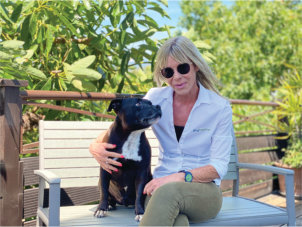
Louise Stapleton-Frappell – B.A. Hons. PCBC-A. PCT-A. CAP3. CTDI. CWRI. DN-FSG2. DN-CPCT2. FFCP, Professional Canine Behavior Consultant and Trainer – Accredited by the Pet Professional Accreditation Board , Co-Partner and Faculty Member of DogNostics Career Center, and Board Member of The Pet Professional Guild.
Louise’s experience, her background as a teacher and her impressive pet industry credentials, means she is uniquely qualified to share her skills and knowledge with both the public and pet industry professionals. The creator of the DogNostics Dog Trainer Certification Program, Louise has presented at conferences internationally and has gained a reputation for expertly teaching and training humans and canines at her own establishment, The DogSmith of Estepona , in Southern Spain. Louise has published numerous articles on dog training and dog behavior and is also the published co-author of the following titles, A Lexicon of Practical Terms for Pet Trainers and Behavior Consultants, Pet Training and Behavior Consulting: A Model for Raising the Bar to Protect Professionals, and is a Pets and Their People contributor.
DogNostics Education is a Pet Professional Guild Corporate Partner.

Barks
Topics
Archives