


Does Your Cat Want a Feline Friend?
by Misty Hampton
Introducing a new cat into the home is exciting, but it’s not always smooth and easy. There can be some speed bumps, especially if you already have a resident cat. Understanding feline social dynamics can help set you up for success.
In this upcoming series of posts, we will explore:
- How to determine if your resident cat might appreciate a feline companion (Does Your Cat Want a Feline Friend?)
- Considerations when choosing a cat to adopt (Cat Adoption: Considerations for Multi-Cat Homes)
- Some tips for starting off right (Fighting Like Cats and…Cats?)
Adopting a Cat
Home Considerations- Resources
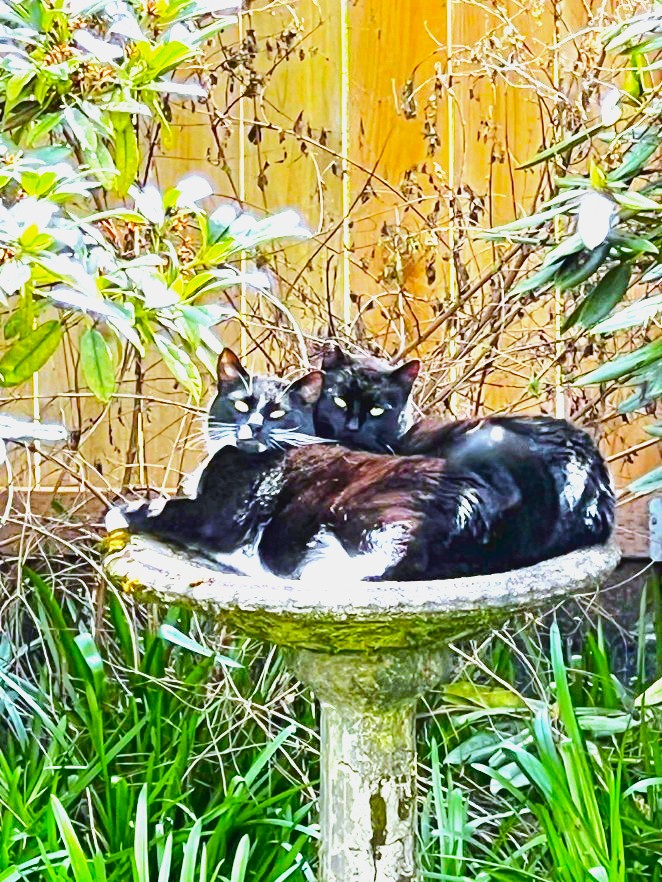
It’s important to consider the availability of resources. Consider the amount of space in the home – not just square footage, but space that is usable for the cats. That includes vertical space like shelves and cat trees.
Also factor in funds available for pet food and supplies, and veterinary expenses.
And, importantly, consider the amount of time and energy you have to give.
Do You Speak Cat?
When it comes to pet cats, some become stressed from living with other cats, while others are stressed when they live without feline companions.
While our cats can’t tell us verbally whether or not they would like a feline companion, their history, their personality, and their behavior patterns give us clues. Below are lists of positive and negative signs:
Positive Signs
- grew up around other cats
- history of friendly interactions with other pets
- more curious than fearful
- healthy
- young (less than a year old)
- new cat is a relative
- compatible personalities/energy levels
Negative Signs
- raised in isolation
- has been an only cat for years
- history of conflict with other pets
- has big reactions when seeing unfamiliar cats outside
- has big reactions to other cats’ scents
- easily scared and stressed
- medical and/or behavior issues
- senior cat (10+)
- incompatible personalities/energy
A cat who exhibits only negative signs probably would not appreciate a new cat being brought into their home.
If a cat shows more positive than negative signs, it’s still not a guarantee that they will get along with the new cat, but chances are better.
About the Author

Misty Hampton (CCBC, FFCP) is a cat trainer and behavior consultant and owner of Fellow Creatures Pet Consulting. She started teaching at age 12. For 13 years, she was an instructor for a home-schooling community. Since 2001, she has been a math and science tutor. Now, she is a life coach for teens and young adults as well. She also runs a birding club for Lake Oswego Parks & Recreation.
Her passion is helping people better understand misunderstood animals. She shares her life with her husband Jesse and their five cats: Linus, Jasper, Abigail, Pearl, and Piper.

Pets and Their People Blog
Topics
Archives