


Looking for a Dog Trainer or Behavior Consultant? Here’s What You Need to Know
by Niki Tudge
Positive reinforcement (R+) and force-free training are based on the scientific principles of animal learning. They are widely endorsed by leading veterinary and animal behavior organizations.
However, there are many common misconceptions and outright myths about this training approach, often perpetuated by proponents of older, more aversive methods. So, before you hire a dog trainer, or any professional who will interact with and care for your pet, here are some questions and answers about R+ and force-free training.
Q. Is positive training just bribery? (Will my dog listen if I don’t have a treat?)
A. This is one of the most persistent and incorrect myths. Proper R+ training is about earning a “paycheck” for a job well done, not a bribe.
- Bribe vs. Reinforcer: A bribe is presented before a behavior to entice the recipient. A reinforcer is delivered after a behavior as a reward. In ethical R+ training, the treat is a reinforcement (reward) for a behavior that has already occurred. Reinforced behavior is more likely to occur again, as it provides access to something your dog desires.
- Phasing out treats: Once a behavior is fully learned, the trainer gradually fades out the food reward. As your dog becomes proficient with the new behavior, treats are gradually replaced with real-world rewards—like praise, play, or freedom to explore—ensuring your dog listens reliably even when food isn’t visible. This process builds a strong reinforcement history, so your dog will perform the behavior even when there’s no treat in sight.
Q. Are force-free trainers too permissive?
A. Force-free training is not the same as permissive training. It is about teaching your dog what you would like them to do or how you would like them to behave in certain situations, rather than punishing them when they do something you do not like or want.
- Positive doesn’t mean permissive: A skilled force-free trainer sets clear behavior criteria and expectations. Instead of using physical aversives, something a dog would seek to escape or avoid, they use a variety of management techniques to prevent the problematic behavior while reinforcing alternative, more preferable behaviors. For example, if your dog jumps on guests, the trainer will teach your dog an alternative behavior, like “go to your bed” or “sit,” and then reward them for it. They might also set up some management activities to help prevent the jumping in the first place. Prevention could include keeping your dog on a leash or behind a small gate when guests arrive or when the situation is problematic for your dog.
- The relationship comes first: Force-free and positive-reinforcement methods focus on rewarding desired behaviors rather than punishing unwanted ones. This approach builds a strong, positive relationship between you and your pet because your dog (cat, horse, rabbit, bird, etc.) learns through motivation and fun, not fear and intimidation.
Q. Does positive reinforcement training work for aggressive or ‘difficult’ dogs?
A. The American Veterinary Society of Animal Behavior (AVSAB) and other leading organizations recommend R+ methods as the only safe and effective way to address fear, anxiety, and aggression.
- Address the root cause: Aggression is almost always rooted in fear or anxiety. Using aversive methods like prong collars, choke chains, or shock collars can suppress the behavior, but they don’t change your dog’s underlying emotional state. In fact, they can make the fear and aggression worse, leading to more dangerous behaviors.
- Build trust and confidence: R+ focuses on changing your dog’s emotional response to a trigger. By rewarding calm behavior and creating positive associations, your dog learns to feel more confident and less fearful, which in turn reduces their need for aggressive (and/or distance-increasing) displays such as snarling and lunging. For example, if your dog associates other dogs with positive outcomes, then the need to lunge, growl, or bark is removed, and so is the problem behavior.
Q. Can I get my dog to stop an unwanted behavior without a physical ‘correction’?
A. Physical corrections and any type of corporal punishment stem from a misunderstanding of how dogs (and other sentient beings) learn. Stopping a behavior is just one piece of the puzzle. The goals are to teach your dog what to do instead and to address the underlying need the behavior is communicating. Pet guardians and pet professionals need to set up training conditions so we empower dogs to feel safe and make safe, appropriate decisions as they navigate life with their humans.
- Focus on what you want: If your dog is barking at the mail carrier, a physical correction might stop the barking in that moment, but doesn’t teach your dog how to react next time. Nor does it change the underlying emotional response to the mail carrier. A force-free trainer might teach your dog to go to a mat or a designated “quiet place” when the mail carrier arrives and reward them for that desired behavior. Or they can show you how to build positive associations with the mail carrier so your pet learns a happier emotional response to what used to feel like a stressful trigger.
- Management and redirection: Force-free trainers use management techniques to prevent your dog from practicing unwanted behaviors while they teach new and more acceptable responses. Over time, with practice, the new behavior becomes your dog’s default.
Q. Is positive training slow and does it require much effort?
A. While it’s true that building a new behavior takes time and consistency, scientific studies have shown that R+ training can actually be faster and more effective in the long run.
- Faster learning: By rewarding desired behaviors immediately, your dog quickly forms a positive association and learns what is expected. This practice can lead to a more efficient and enjoyable training process for both the dog and the human!
- Better retention: Since the training is based on building a positive relationship and a love of learning, animals trained with these methods are often more willing to work and have a better understanding of the concepts, leading to more reliable behaviors over time.
When we dispel the myths and understand the practical applications, it’s clear that positive reinforcement and force-free training are not only more humane but also more effective and sustainable for building a strong, trusting, and lasting relationship with your dog.
So, when choosing a trainer or behavior consultant, ask lots of questions to confirm that their key focus is on ensuring pets are relaxed and happy during training and care procedures.
About the Author

Niki Tudge – MBA, PCBC-A, CABC, CDBC
As the founder and President of The Pet Professional Guild, DogNostics Education, and The DogSmith, Niki Tudge brings substantial leadership experience to the pet industry. She has published numerous articles on dog training and behavior, and her businesses have been featured in publications such as the New York Times.
Niki’s professional credentials include AABP-Professional Dog Trainer, AABP-Professional Dog Behavior Consultant, and both PCBC-A and PCT-A accreditation through the Pet Professional Accreditation Board. She also holds diplomas in Animal Behavior Technology and Canine Behavior Science & Technology from the Companion Animal Science Institute.
Combining her industry expertise with a strong business foundation, Niki holds a business degree and an MBA from Oxford Brookes University. She is also a certified Six Sigma Black Belt, an HCITB TS1, TS2 & TS3 certified people trainer, a Certified Facilitator, a Certified Transformation Specialist, and a Project Manager.
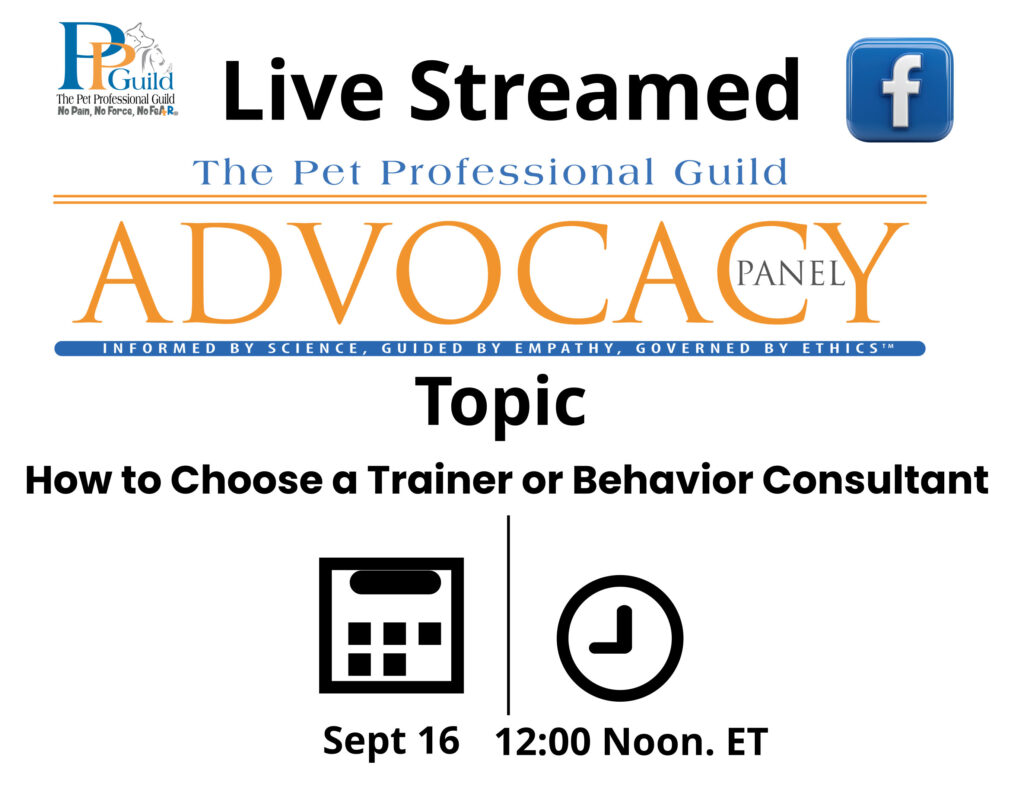
Interested in this topic? Listen to the September 16, 2026 Advocacy Panel discussion!
How Does It Work?
- Before the event, you can join this FREE, online event in one of two ways:
- Log in via the Zoom link accessed by registering for the event on PPG’s website.
- OR watch the Facebook Live event on PPG’s Facebook page. Simply jump onto PPG’s Facebook page at the allotted date and time (September 16, 12pm ET) to catch the conversation and ask questions.
- Panel sessions are moderated by Don Hanson.
- Conversations are free flowing, allowing each panelist to answer questions and supplement other panelists’ responses.
- Missed the live Advocacy Panel? No problem! Listen to the discussion on the PPG Podcast after the event.

Pets and Their People Blog
Topics
Archives