


Why Do We Keep Punishing Our Pets? It’s Not What You Think.
It’s a scenario many pet guardians know well: you walk in the door to find a “surprise” on the carpet, or your dog barks relentlessly at the mail carrier. In the heat of the moment, a sharp “NO!” or a frustrated tug on the leash feels like the natural, immediate response. And for a split second, it works, right? The barking stops for a moment, the dog cringes, and you feel like you’ve communicated your displeasure.

However, here’s the deal: While reward-based training is overwhelmingly recommended by vets and animal behavior consultants, a significant number of pet guardians still rely on some form of punishment. Why does this age-old method continue to resonate so deeply with us, even when we know there might be better ways?
It Boils Down to Instant Gratification (For Us, Not Them!)
The primary reason punishment feels effective is that it often delivers immediate results. When you shout at a barking dog, the barking might stop. When you scold a cat for scratching the furniture, they might pause. This immediate cessation of unwanted behavior serves as a powerful reward for us.
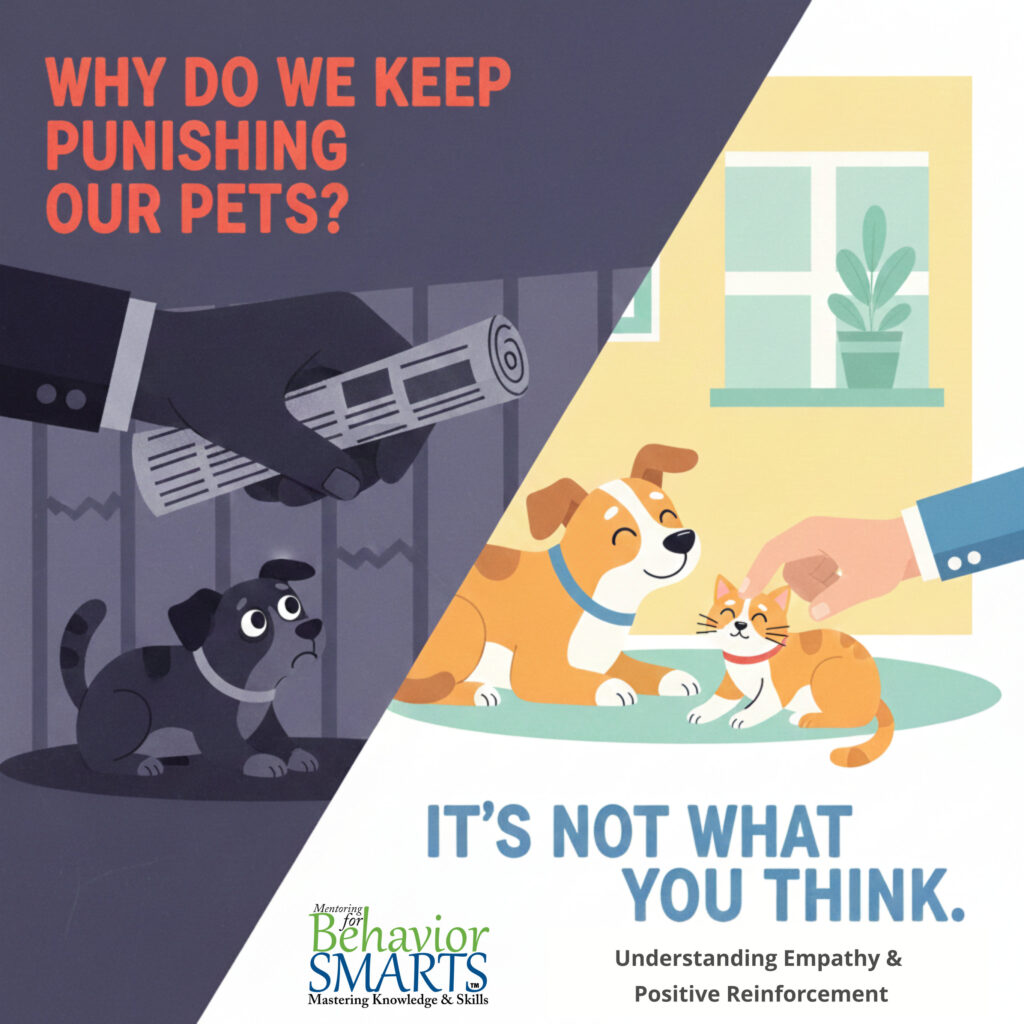
Our stress is relieved, and we instinctively (yet incorrectly) believe we’ve “solved” the problem. In reality though, the opposite is true.
Instead of truly learning what we want them to do, pets, fearing punishment, either learn to suppress behaviors when we’re around (failing to get the underlying need beneath the behavior met), or worse, become afraid of us.
A Quick Fix vs. Lasting Learning
Another factor is our preference for clear, binary communication. “Good!” (treat) and “No!” (punishment) seem like straightforward signals. But, while punishment offers a perceived shortcut to the control we seek, it is often less effective, in the long run, than force-free management and training.
And though it can feel frustrating and slow to constantly set up situations for success or to wait for a desired behavior to reward, that approach to teaching pets results in lasting learning.
The Illusion of Understanding
We’re also wired to anthropomorphize our pets – to project human values and understanding onto them. When your dog greets your angry arrival with a “guilty” look (ears down, tail tucked), it’s easy to think, “He knows what he did!” However, research shows this body language isn’t communicating guilt. It’s often a fear response to your angry body language, or a learned association with the mess on the floor, not a moral understanding of having broken a rule.
Because we believe they “know better,” punishment can feel like a justified consequence. A closer look, however, reveals why you want to avoid the unintended consequences of punishment.
The Hidden Costs
While the appeal of giving into frustration and shortcuts is strong, the drawbacks of punishment are significant. It can lead to:
- Increased anxiety and fear in pets.
- Damage to the bond of trust between you and your pet.
- Even aggression, as a pet might lash out in fear or frustration.
Understanding why punishment resonates with us is the first step toward embracing more positive, effective, and humane training methods. By focusing on teaching our pets what to do, rather than just what not to do, we build a stronger, happier relationship, grounded in trust and clear communication.
About Canine Conversations

Canine Conversations feature dog training advice from the professionals of PPG’s Canine Division . Our mission is to help you navigate your dog training journey with the most up-to-date information and training advice backed and supported by the scientific community. We hope you enjoy our conversations and find them informative and useful in the development of healthy, trusting relationships with your pets.

Pets and Their People Blog
Topics
Archives