

A Kinder World for Pets and People: The Building Blocks of Meaningful Change
by Tasha Attwood
A recent Pet Professional Guild Advocacy Panel discussion centered on a simple but powerful question: how can guardians and professionals work together to create a kinder world for pets?
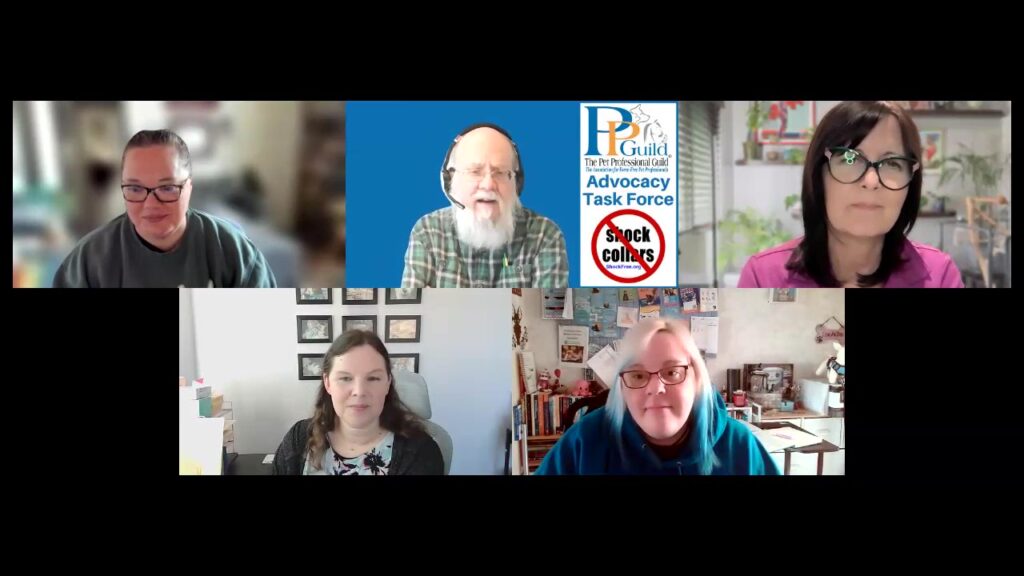
For this event, moderator Don Hanson was joined by panelists Rebekah King, Kim Silver, Jennifer Van Valkenburg, and myself. It was a very powerful and emotive discussion, with a message of kindness for everyone, and I’ve summarized some of the highlights for pet professionals here.
Well-being Begins with Understanding
Kim Silver opened the discussion by reflecting on welfare as the starting point for everything else.
She spoke about the need to look beyond survival and instead consider daily life, species-specific needs, and whether animals are truly able to engage with the world in ways that make sense for who they are.
That means looking at the dog who needs opportunities to sniff, explore and move. It means thinking about the cat who needs enrichment, security and social connection. It means questioning whether a parrot in an empty cage, or a fish in a barren tank, is really having their needs met.
Jennifer Van Valkenburg spoke powerfully about meeting the needs of cats, noting how often they are still viewed through outdated assumptions: easy, low-maintenance, independent, or somehow less in need of care and enrichment than dogs. These myths persist, despite the reality that cats, too, are social, feeling beings with emotional and environmental needs.
The message was clear. Before we can support animals well, we have to slow down, take a breath, and ask,
“What might be missing from their world?”
Supporting Pets Also Means Supporting Their Humans
One of the strongest aspects of the discussion was its insistence that human well-being matters too.
We cannot talk about animal welfare without talking about human welfare.
Guardians are often carrying far more than meets the eye. They may be managing health issues, family pressure, financial strain, lack of time, fear, grief, or the everyday weight of caring for an animal with complex needs.
And too often, when they admit they are struggling, they might be met with shame instead of support.
This point came through particularly strongly when the conversation turned to rehoming. I highlighted how painful it can be when guardians reach a point of saying, “I can’t do this,” only to be met with judgement, alienation or pressure to keep going at all costs.
The panel challenged this reaction directly, questioning whether it is kinder for an animal to remain in a home where resentment, exhaustion and/or fear are growing, or whether sometimes the kinder option is to let that animal move on, to a situation where their needs can be met more fully.
Jennifer built on this point by drawing a parallel with force-free practice itself.
If we believe in offering animals choice, support and humane treatment, should that not also shape the way we respond to human clients? Shame, she pointed out, is not a compassionate teaching tool. In many ways, it lingers far longer for people than a single training error or difficult decision ever will.
The panel also acknowledged how difficult it can be for guardians to navigate outside pressure. Friends and family may offer unsolicited opinions, criticize force-free approaches, or encourage harsh shortcuts.
Professionals can find themselves trying to support not only the guardian and the animal, but manage the emotional fallout of these wider relationships and expectations, too.
At its core, the message was simple: if we want kinder outcomes for animals, we need kinder support systems for people.
No Guarantees
Another important theme was honesty.
Professionals cannot fix everything. Nor should they pretend they can.
Empathy must come before ego.
The panel spoke openly about the complexity of behavior cases and the many variables involved: genetics, health, learning history, environment, household change, time, emotional capacity, safety, and simple day-to-day unpredictability.
There is rarely one straight path from problem to solution.
Kim described this model as an “alphabet plan” — starting with Plan A, then moving through Plan B, Plan C, and sometimes many more besides.
What matters is not the illusion of certainty, but a willingness to stay responsive and realistic.
Sometimes the best outcome is not the one originally imagined. One family she described eventually rehomed a dog with a relative after trying multiple approaches in the context of serious inter-household aggression and the imminent arrival of a baby. Rather than seeing that as failure, the panel framed it as a humane and thoughtful decision made in the interests of both safety and welfare.
Several panelists also emphasized the value of humanizing ourselves as professionals. Sharing our own stories of difficult puppies, challenging rescues, messy realities and learning curves can help guardians feel less alone.
Let’s assure clients that needing guidance is not shameful, and that even experienced professionals have lived through uncertainty, mistakes and overwhelm.
Small Wins Still Count
One of the warmest moments in the discussion was around progress and expectations.
People often want change quickly. They want certainty, end goals, and reassurance that things are moving swiftly enough.
But as the panel made clear once more, animals are not robots, and behavior change does not happen in a straight line.
Kim spoke about the importance of using human analogies to help guardians relate to this fact. Lifestyle, change, habits, emotions, and environmental influences all affect us. Why would it be any different for the animals we live with?
The panel stressed the importance of recognizing the quieter signs of progress: a pause, a softer response, one successful interaction, one calmer day, one moment of trust.
These things matter. They are not insignificant. They are the very building blocks of meaningful change.
And sometimes, as Rebekah King, pointed out, neither the human nor the animal is in the right place for learning that day. Rest, flexibility and emotional awareness are part of humane practice, too.
The Overlooked Animals
The panel also highlighted the significant gap in public understanding and professional care for species beyond dogs.
Jennifer noted that many people do not even realize cat behavior professionals exist! At the same time, cat guardianship continues to grow, while cats often receive less behavioral support and less day-to-day agency than dogs.
I broadened the discussion further by speaking about rats and other small animals, pointing out how often their needs are minimized or misunderstood. Small cages, poor environments, outdated handling advice and a lack of grief recognition all emerged as concerns.
Similar themes were raised around birds, fish, and other smaller companion animals, who are still too often treated as decorative or disposable despite their clear capacity for learning, memory and distress.
Creating a kinder world means widening the circle of concern.
The Wrap-Up
The final reflections of the panel returned to something both practical and deeply human: kindness has to include us, too.
I spoke about drawing on community and allowing others to support us where they can. Jennifer offered the familiar but powerful reminder that we must put our own oxygen mask on first.
Don reflected on patience — not only as something animals need from us, but as something that changes us as people when we practice it.
If there was one thread that tied the discussion together, it was this: professionals and guardians working together to help create a kinder world for pets is not simply about training techniques or welfare checklists.
It is about perspective.
Kindness is about being willing to slow down, to listen, to challenge myths, to support rather than shame, to recognize complexity, and to appreciate animals as sentient beings living alongside equally complex human beings.
Perhaps that is the real work.
Not only asking how we improve life for animals, but how we become the kind of humans they need us to be.
About the Author
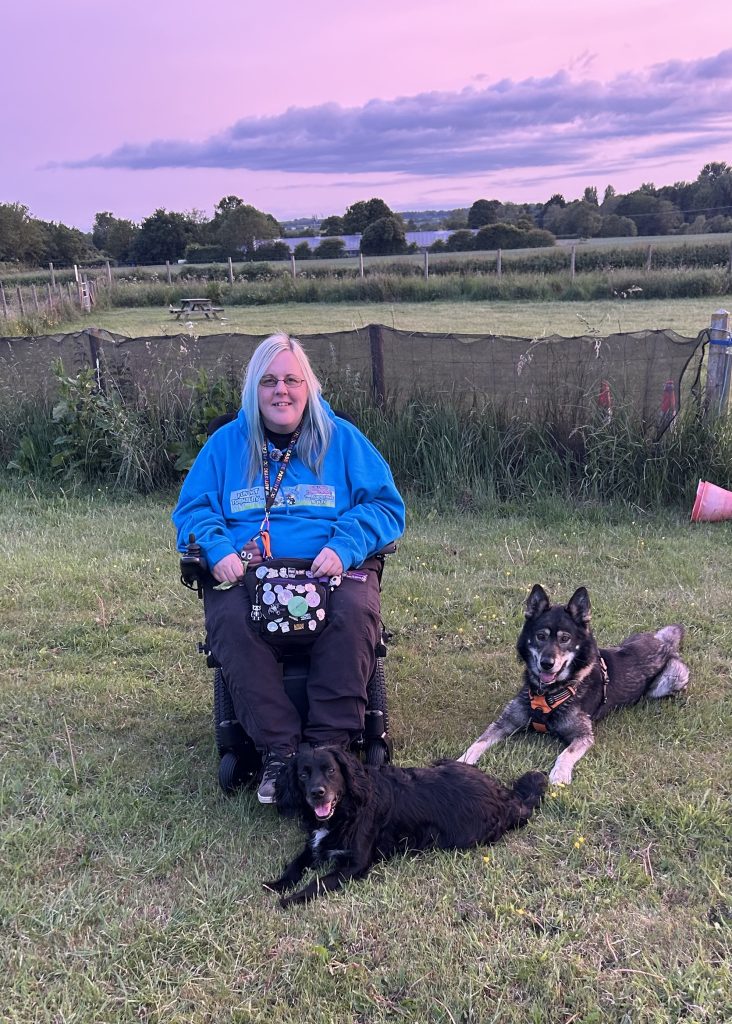
Tasha Attwood is a force-free dog trainer and behaviorist in Lincolnshire, UK. Very passionate about force-free training and methods, Tasha has trained four dogs, a hedgehog, and a rabbit to expert titles with trick titles -and two bearded dragons currently at novice trick title level -to not only enrich their lives but prove that force-free training can be done with any species. As a wheelchair user, Tasha absolutely loves to show training tutorials to demonstrate how dogs can be trained despite limitations.
Learn more at: http://www.muttsnmischief.com. Follow on Facebook .
In Case You Missed It…
March 2026 Advocacy Panel: Guardians and Professionals Working Together to Make a Kinder World for Pets.
- Listen to the podcast.
February 2026 PPG Advocacy Panel: How Can Professionals Help Make a Kinder World for Pets?
January 2026 PPG Advocacy Panel: How Can Pet Guardians Help Create a Kinder World for Pets?

Barks
Topics
Archives