


Help Cats Cope with Stressful Situations
by Misty Hampton
It’s not uncommon to hear that someone is using calming supplements, a safe space, or a ThunderShirt® for their dog during stressful events, such as holidays, when there are fireworks going off, or strangers coming to visit. There are lots of tools to help dogs cope with stressful situations. So, what about cats?
Here, I’ll explore the use of tools like supplements, calming music, pheromone sprays, aromatherapy, and medications to help create a calming feline environment.
Specialty Foods and Supplements
In my experience, clients are more open to using nutraceuticals than prescription drugs.
Nutraceuticals are specialty foods and supplements that provide health benefits.
They are often more palatable, so it can be easier to get cats to take them. When used correctly, they’re also safer for long-term use, with fewer side effects (DVM360, 2016).
Calming Supplements
There are several branded supplements that claim to reduce anxiety in cats. Some of the most well-known supplements for cats include Composure, Zylkene® (or Calmkeen®), Anxitane®, and Solliquin®.
The main ingredients in these supplements often include some combination of L-theanine, Magnolia officinalis extracts, Phellodendron amurense extracts, L-tryptophan, Bifidobacterium longum, and alpha-casozepine, a calming compound derived from milk protein (Lindell et. al, 2025).
There is some evidence that these ingredients may be helpful as part of a multi-modal approach for treating anxiety (Dramard et. al, 2018 and Beata et. al, 2007). However, there are few published studies.
Because supplements are unregulated, it’s important to choose a reputable product. Look for the National Animal Supplement Council NASC quality seal.
Consult with your cat’s veterinarian to ensure that any supplements you are considering are safe to use with your pet’s existing health conditions and current medications.
Pre- and Probiotics
Pre- and probiotics can be beneficial, but they may not be the right fit for every individual.
Studies – both with animals and humans – have shown that gut microbiota play an important role in regulating stress. [See References & Resources below.]
Therefore, improving the composition of intestinal flora may have therapeutic potential in relieving anxiety and stress (Fan et. al, 2023). Studies with rats have shown that some prebiotics and probiotics decrease levels of stress hormones and inhibit inflammation (Chudzik et. al, 2011).
One study found that cats who had probiotics added to their food had fewer incidents of diarrhea in a shelter setting (Bybee et. al, 2011).
Like with supplements, it’s important to select pre- and probiotics from a reputable brand.
Bottom Line: Consult with your veterinarian to determine if pre- or probiotics are an appropriate choice for your cat.
CBD
At this time, there is not enough evidence to broadly say that cannabidiol (CBD) products for pets are safe or effective for stress reduction in cats.
There is some evidence that CBD may be helpful for a variety of uses, including reducing seizures and relieving pain from arthritis. However, “to date, no studies confirm CBD has any benefit for treating behavioral conditions in dogs and cats” (Lindell et. al, 2025).
There has been little to no research on the use of CBD with cats, and its use is unregulated. Some CBD products may be low-quality, and others may contain harmful ingredients (Coates, 2019).
If you want to try a CBD product for your cat, consult with an experienced integrative veterinarian who can help you evaluate the risks and benefits.
Veterinary Diets
It’s possible that a specially formulated diet could be helpful in alleviating anxiety, but the evidence is unclear. Overall, studies of therapeutic foods have been inadequate – too many confounding variables or lacking a control group – and inconclusive (Beynen, 2016).
What is known is that stress is a trigger or exacerbating factor in feline idiopathic cystitis (FIC), a painful condition that can contribute to litter box avoidance (Stella et. al, 2013 and Buffington et. al, 2006). Cats who are fed a specialized urinary diet have fewer recurrences of FIC signs (Kruger et. al, 2015; Naarden & Corbee, 2019). For example, the Hills c/d Urinary diet – available in both wet and dry formulations – is designed to promote a healthy urinary tract by preventing the formation of urinary crystals.
The Royal Canin® Calm diet is formulated with alpha-casozepine and L-tryptophan. One study found that cats who were fed this food over a period of two weeks showed less anxiety in an unfamiliar environment. However, their fear of strangers was not reduced (Landsberg et. al, 2016).
Calming Scents
It’s important to know how an individual cat responds before deciding if a particular scent is an appropriate tool for relaxation.
Catnip and Silvervine
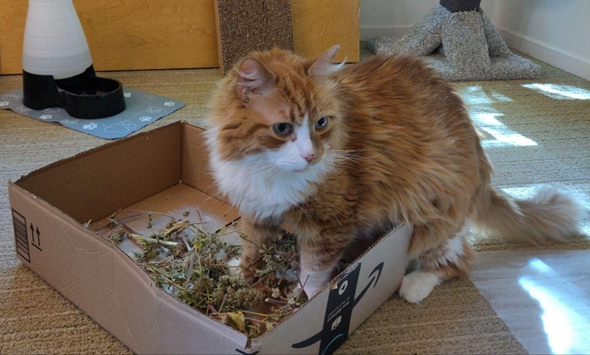
Catnip (Nepeta cataria) is a perennial herb from the mint family that contains nepetalactone, an aromatic compound that triggers a strong behavioral response in some cats.
Individual cats respond differently to catnip, based on their genetics and their personality (Bol et. al, 2022). Anywhere from 30% to 50% of cats show no reaction. (Kittens under 6 months old typically don’t respond to catnip.)
Silvervine (Actinidia polygama), Tatarian honeysuckle (Lonicera tatarica), and valerian (Valeriana officinalis) contain different compounds, but have been found to have similar effects.
Silvervine is a popular alternative for cats who do not respond to catnip. One study found that almost 80% of cats were responsive to silvervine, compared to 68% of cats who responded to catnip. About 75% of the cats who were unresponsive to catnip were responsive to silvervine (Bol et. al, 2017).
All of these compounds are safe and non-addictive (Uenoyama et. al, 2023). Cats who respond to catnip and/or silvervine are thought to experience a temporary euphoric feeling, although individual cats respond differently. Often, the cat will rub their face in it, roll around in it, and purr. Some cats become extra excited and playful. Whether the effects are calming or stimulating depends on the individual. Interestingly, catnip is more likely to be relaxing if it’s consumed (Humane World for Animals, 2022).
Are Essential Oils Safe for Cats?
Aromatherapy is the use of aromatic plant compounds to promote health and well-being. Essential oils such as lavender and chamomile are known for their calming effects (Glissman, 2025).
However, most essential oils – notably, including lavender – are toxic to cats.
Copaiba, helichrysum, and frankincense are a few that are considered safe (Shojai, 2025). Because of their acute sense of smell, many of the scents we find pleasant may be overpowering for cats. But, if you do want to try aromatherapy to create a calming atmosphere at home:
- Make sure to dilute essential oils and keep them out of your cat’s reach, ensuring they never contact them directly.
- Don’t use essential oils in every room. It’s important to provide choice, so your cat(s) can avoid any scents they don’t like.
- Importantly, do not use essential oils in the cat’s ‘safe room‘ until you know their individual preferences.
- Avoid using diffusers, which are particularly dangerous because they spread aerosolized oils (BC SPCA, 2024).
Pheromones and Funny Faces
Animals produce pheromones – chemical signals used to communicate with members of the same species. Whether or not humans can detect pheromones is still being studied.
Cats have a specialized structure on the roof of their mouth – called the vomeronasal organ – that detects pheromones. That’s what cats are doing when they make this funny face, known as the flehmen response (Marek, 2021).
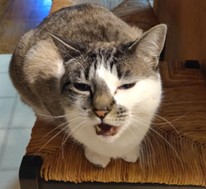
Cats have scent glands all over their bodies – in their cheeks, on their paws, and on their rear end. Facial scent glands produce “happy” pheromones. When cats rub their cheeks on objects, they are marking these objects as safe (Marek, 2021), and creating a group scent within a social group.
Synthetic pheromones – modeled on feline facial pheromones and maternal pheromones – are claimed to reduce urine-marking, furniture-scratching, and inter-cat tension.
Well-known brands are FELIWAY ®and Comfort Zone®. Products are available in the form of spray and diffusers. The spray is meant to be used on bedding and in carriers. Never spray it directly on a cat. FELIWAY spray is widely used in veterinary clinics – on towels and in waiting areas – to reduce stress.
Results of clinical studies of these products are mixed.
Pheromones may be useful as a component of a complete behavior modification program (DePorter et. al, 2018). There is no consistent evidence of their effectiveness, but they [pheromone sprays] are unlikely to cause harm (Brennen, 2018). A recent study indicates that a new product, FELIWAY® Optimum, may be effective in addressing multiple problem behaviors (De Jaeger et. al, 2021).
Collars impregnated with calming compounds are also available. While studies showed the collars are effective at reducing problem behaviors, all of the collars – even untreated controls – caused discomfort and skin irritation, suggesting that collars are not a desirable mode of delivery (Endersby et. al, 2024).
Sounds
The right music can help create a relaxing environment.
Studies have found that classical music and species-specific music – music specifically made for cats, in the frequencies they naturally use for communication – help reduce stress in a veterinary clinic setting (Hampton et. al, 2019; Paz et. al, 2021). Of the two, cats have a preference for species-specific music (Snowdon et. al, 2015).
A recent literature review found that “music can be an effective tool to help calm dogs and cats before, during, and after surgery, improving their overall experience and potentially enhancing their recovery” (Georgiou & Galatos, 2025).
For human patients, listening to familiar music can evoke a feeling of empowerment. This pleasant feeling is associated with the release of dopamine and other hormones which lead to pain relief and relaxation (Georgiou & Galatos, 2025). While it may not be practical to let dogs and cats choose the music they listen to, the authors suggested that listening to familiar music may be more comforting.
Many cats enjoy nature sounds and videos of wildlife as well, but these can be exciting rather than calming.
Why Do Cats Purr?
Cats don’t just purr when they’re content. A cat’s purr is also self-soothing. When a cat purrs, endorphins are released into the bloodstream. Endorphins function to reduce inflammation, ease pain, and alleviate stress, helping the cat heal. A cat’s purr has health benefits for humans as well! The vibrations have been shown to lower blood pressure, reduce stress, and promote healing (Mariani, 2023). The sound of recorded purring can be used to help cats relax.
It’s important to consider individual preferences – both the cat’s and the human’s. If you’re going to be in the room with the cat, choose sounds that you both find relaxing. It won’t do any good to play music that puts you on edge, because mood affects behavior, and your cat will perceive it.
If you’re interested in playing sounds to help your cat relax, some worth trying are Music for Cats, Through a Cat’s Ear, Pet Tunes Feline (by Pet Acoustics), classical music, and purring. There is also relaxing music for cats on YouTube from Relax My Cat and Cats Only Channel.
Medication
For cats with extreme anxiety, medication can be helpful as part of a complete behavior modification plan. Only when the cat feels safe will training be effective.
Antianxiety medications function to bring down the cat’s baseline stress level.
Event medications are short-term medications given prior to a stressful event. They take effect within a few hours, and can last for up to 12 hours. The most common event medications used for cats are gabapentin, trazodone, and – more recently – pregabalin (Gonzalez, 2024).
Some cats may benefit from continuing to take daily medications throughout their lives. Because the use of these medications is off-label (the drugs weren’t designed to be used for cats), it’s important that cats who are on these medications get at least an annual complete veterinary exam, to ensure that the treatment plan is still appropriate for their needs.
Common standing medications, long-term medications that are given daily, are fluoxetine and clomipramine. Recently, alternatives have been suggested that may have fewer side effects, including sertraline, venlafaxine, and lorazepam (Richter, 2025). All of these are psychotropic medications aimed at promoting increased levels of “feel good” hormones. Their goal is to reduce urine marking, aggression, and overgrooming (Capuzzi, 2023).
Because they alter brain chemistry, these medications typically take four to six weeks to fully take effect. To stop the medication, dosage must be tapered off, not stopped abruptly. “Gradual reduction allows the brain chemistry to adjust, reduces the likelihood of side effects or withdrawal signs, and makes it possible for the owners to monitor changes in behaviour” (Denenberg & Bräm Dubé, 2018). With psychotropic medications, there is a risk of potentially dangerous drug interactions, so it’s important to discuss with your veterinarian any other medications your cat is taking.
Pet keepers might worry that fluoxetine will change their pet’s personality. Dr. Anna Delabar, a representative of the Humane Society Veterinary Medical Association, argues that it’s not a matter of “drugging” cats, it’s about “addressing their emotional and behavioral health” (quoted in Lange, 2023). Anti-anxiety medication allows cats who might otherwise spend their days hiding to emerge, and it resolves behavioral issues that might otherwise end with the cat being surrendered to a shelter.
Two of my cats are on antianxiety medication, prescribed by our veterinarian. Rather than changing their personalities, I have found that the medication improves their quality of life.
About the Author
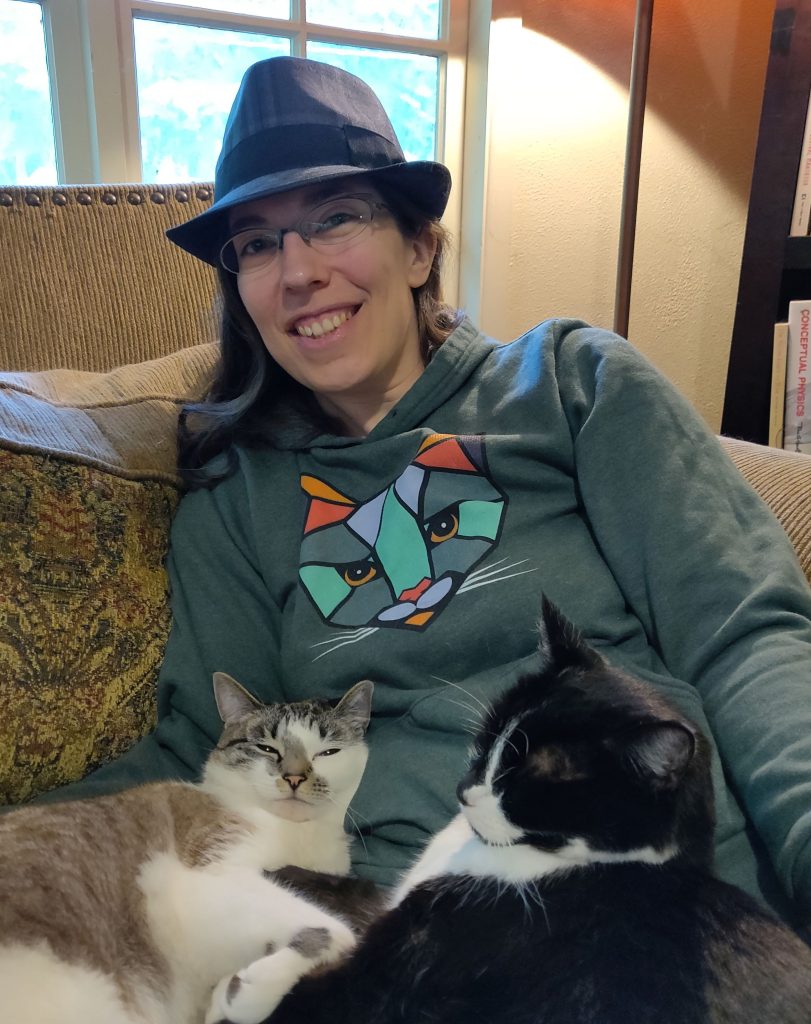
Misty Hampton (CCBC, FFCP) is a cat trainer and behavior consultant and owner of Fellow Creatures Pet Consulting . She started teaching at age 12. For 13 years, she was an instructor for a home-schooling community. Since 2001, she has been a math and science tutor. Now, she is a life coach for teens and young adults as well. She also runs a birding club for Lake Oswego Parks & Recreation.
Her passion is helping people better understand misunderstood animals. She shares her life with her husband Jesse and their five cats: Linus, Jasper, Abigail, Pearl, and Piper.

A PPG Webinar: Keep Calm and Kitty On: Relaxation & Resilience Strategies for Cats with Misty Hampton
There are lots of tools and strategies to help dogs cope with stressful situations. But with cats, it’s a different story. It’s considered normal for them to hide for hours when, undoubtedly, they’re experiencing stress. We can do better!
In this webinar, learn strategies to help cats navigate stressful situations and to develop the resilience to cope with stressors on their own when you aren’t there to help them. The presentation will include demo videos of mat relaxation and desensitization to separation.
Article References & Resources
Calming Supplements
Beata, C., Beaumont-Graff, E., Coll, V., Cordel, J., Marion, M., Massal, N., Marlois, N., & Tauzin, J. (2007). Effect of alpha-casozepine (Zylkene) on anxiety in cats. Journal of Veterinary Behavior, 2(2), 40–46. https://doi.org/10.1016/j.jveb.2007.02.002
Bybee, S. N., Scorza, A. V., & Lappin, M. R. (2011). Effect of the Probiotic Enterococcus faecium SF68 on Presence of Diarrhea in Cats and Dogs Housed in an Animal Shelter. Journal of Veterinary Internal Medicine, 25(4), 856–860. https://doi.org/10.1111/j.1939-1676.2011.0738.x
DePorter, T. L., Landsberg, G. M., Araujo, J. A., Ethier, J. L., & Bledsoe, D. L. (2016). Alleviating anxiety: A roundtable discussion on behavior management with a focus on supplements. DVM360, 1–16. https://www.dvm360.com/ view/alleviating-anxiety-roundtable-discussion-behavior-management-with-focus-supplements
Dramard, V., Kern, L., Hofmans, J., Rème, C. A., Nicolas, C. S., Chala, V., & Navarro, C. (2018). Effect of l-theanine tablets in reducing stress-related emotional signs in cats: an open-label field study. Irish Veterinary Journal, 71(1). https://doi.org/10.1186/s13620-018-0130-4
Lindell, E., Horwitz, D., & Landsberg, G. (2025). Behavior Counseling – Complementary Medication. VCA Animal Hospitals. https://vcahospitals.com/know-your-pet/behavior-counseling—medication-complementary
Pre- and Probiotics
Bybee, S. N., Scorza, A. V., & Lappin, M. R. (2011). Effect of the Probiotic Enterococcus faecium SF68 on Presence of Diarrhea in Cats and Dogs Housed in an Animal Shelter. Journal of Veterinary Internal Medicine, 25(4), 856–860. https://doi.org/10.1111/j.1939-1676.2011.0738.x
Chudzik, A., Orzyłowska, A., Rola, R., & Stanisz, G. J. (2021). Probiotics, Prebiotics and Postbiotics on Mitigation of Depression Symptoms: Modulation of the Brain–Gut–Microbiome Axis. Biomolecules, 11(7), 1000. https://doi.org/10.3390/biom11071000
Fan, Z., Bian, Z., Huang, H., Liu, T., Ren, R., Chen, X., Zhang, X., Wang, Y., Deng, B., & Zhang, L. (2023). Dietary Strategies for Relieving Stress in Pet Dogs and Cats. Antioxidants, 12(3), 545. https://doi.org/10.3390/antiox12030545
Lee, A. H., Lin, C.-Y., Do, S., Oba, P. M., Belchik, S. E., Steelman, A. J., Schauwecker, A., & Swanson, K. S. (2022). Dietary supplementation with fiber, “biotics”, and spray dried plasma affects apparent total tract macronutrient digestibility and the fecal characteristics, fecal microbiota, and immune function of adult dogs. Journal of Animal Science, 100(3). https://doi.org/10.1093/jas/skac048
PetMD Vet Advisory Panel. (2025, January 24). 8 Best Cat Probiotics in 2025, Recommended by Vets. PetMD by Chewy. https://www.petmd.com/cat/vet-verified/best-cat-probiotics#684734
CBD
Coates, J. (2019, September 9). Is CBD Safe for Cats? PetMD by Chewy. https://www.petmd.com/cat/care/cbd-safe-cats
Veterinary Diets
American Veterinary Medical Association (AVMA). (n.d.). Feline lower urinary tract disease (FLUTD). American Veterinary Medical Association. Retrieved October 30, 2025, from https://www.avma.org/resources-tools/pet-owners/petcare/feline-lower-urinary-tract-disease
Beynen, A. C. (2016, April 1). Therapeutic de-stressing foods for cats. Creature Companion. https://doi.org/10.13140/RG.2.2.19746.02241
Buffington, C. A. T., Westropp, J. L., Chew, D. J., & Bolus, R. R. (2006). Risk factors associated with clinical signs of lower urinary tract disease in indoor-housed cats. Journal of the American Veterinary Medical Association, 228(5), 722–725. https://doi.org/10.2460/javma.228.5.722
Delamarter, M. (2022, June 17). Nutritional Intervention for Feline Stress. Today’s Veterinary Practice. https://todaysveterinarypractice.com/nutrition/feline-stress-nutrition
Kruger, J. M., Lulich, J. P., MacLeay, J., Merrills, J., Paetau-Robinson, I., Brejda, J., & Osborne, C. A. (2015). Comparison of foods with differing nutritional profiles for long-term management of acute nonobstructive idiopathic cystitis in cats. Journal of the American Veterinary Medical Association, 247(5), 508–517. https://doi.org/10.2460/javma.247.5.508
Landsberg, G., Milgram, B., Mougeot, I., Kelly, S., & de Rivera, C. (2016). Therapeutic effects of an alpha-casozepine and L-tryptophan supplemented diet on fear and anxiety in the cat. Journal of Feline Medicine and Surgery, 19(6), 594–602. https://doi.org/10.1177/1098612×16669399
Naarden, B., & Corbee, R. J. (2019). The effect of a therapeutic urinary stress diet on the short‐term recurrence of feline idiopathic cystitis. Veterinary Medicine and Science, 6(1), 32–38. https://doi.org/10.1002/vms3.197
Stella, J., Croney, C., & Buffington, T. (2013). Effects of stressors on the behavior and physiology of domestic cats. Applied Animal Behaviour Science, 143(2-4), 157–163. https://doi.org/10.1016/j.applanim.2012.10.014
Catnip and Silvervine
Bol, S., Caspers, J., Buckingham, L., Anderson-Shelton, G. D., Ridgway, C., Buffington, C. A. T., Schulz, S., & Bunnik, E. M. (2017). Responsiveness of cats (Felidae) to silver vine (Actinidia polygama), Tatarian honeysuckle (Lonicera tatarica), valerian (Valeriana officinalis) and catnip (Nepeta cataria). BMC Veterinary Research, 13(13). https://doi.org/10.1186/s12917-017-0987-6
Bol, S., Scaffidi, A., Bunnik, E. M., & Flematti, G. R. (2022). Behavioral differences among domestic cats in the response to cat-attracting plants and their volatile compounds reveal a potential distinct mechanism of action for actinidine. BMC Biology, 20(1). https://doi.org/10.1186/s12915-022-01369-1
Glissman, C. (2025, January 29). Calming Herbs for Cats: Natural Solutions for Stress. SmarterPaw. https://smarterpaw.com/blogs/news/calming-herbs-for-cats-natural-solutions-for-stress?srsltid=AfmBOorNVmmtuiaXbSw1Cpq4t8qRk6vjGCOC8UJt0jB2vonl6aXufNpC
Humane World for Animals. (2022). What Is Catnip? Humane World for Animals. https://www.humaneworld.org/en/resources/ catnip-benefits-uses-for-cats
Meowy Janes (Carly & Bill). (2020). Catnip, Silvervine or Valerian Root- What’s The Difference? Meowy Janes. https://meowyjanes.com/catnip-silvervine-or-valerian-root-whats-the-difference
Uenoyama, R., Ooka, S., Miyazaki, T., Mizumoto, H., Nishikawa, T., Hurst, J. L., & Miyazaki, M. (2023). Assessing the safety and suitability of using silver vine as an olfactory enrichment for cats. IScience, 26(10), 107848. https://doi.org/10.1016/j.isci.2023.107848
Essential Oils
British Columbia Society for the Prevention of Cruelty to Animals (SPCA). (2024, March 1). Safety alert! The dangers of essential oils and pets. BC SPCA. https://spca.bc.ca/news/aromatherapy-pets
Shojai, A. (2025, July 1). How to Provide Scent Enrichment for Cats. https://amyshojai.com/scent-enrichment-for-cats/
Pheromone Sprays & Diffusers
Brennen, M. (2018, March 14). Pheromones’ therapeutic use in animals. Veterinary Practice News. https://www.veterinarypracticenews.com/pheromones-therapeutic-use-in-animals
De Jaeger, X., Meppiel, L., Endersby, S., & Sparkes, A. H. (2021). An Initial Open-Label Study of a Novel Pheromone Complex for Use in Cats. Open Journal of Veterinary Medicine, 11(03), 105–116. https://doi.org/10.4236/ojvm.2020.113006
DePorter, T. L., Bledsoe, D. L., Beck, A., & Ollivier, E. (2018). Evaluation of the efficacy of an appeasing pheromone diffuser product vs placebo for management of feline aggression in multi-cat households: a pilot study. Journal of Feline Medicine and Surgery, 21(4), 293–305. https://doi.org/10.1177/1098612×18774437
Endersby, S., Billy, C., & De Jaeger, X. (2024). Efficacy of a pheromone-impregnated collar in controlling feline problem behaviors, and an assessment of adverse events associated with collar use. Frontiers in Veterinary Science, 11. https://doi.org/10.3389/fvets.2024.1468634
Marek, R. (2021, September 20). Feline Pheromones: The Science Behind Them. Fear Free Happy Homes. https://www.fearfreehappyhomes.com/pheromone-science
Calming Music for Cats
Georgiou, S. G., & Galatos, A. D. (2025). Music as a perioperative, non-pharmacological intervention in veterinary medicine. Establishing a feasible framework for music implementation and future perspectives with a focus on the perioperative period of dogs and cats. Frontiers in Veterinary Science, 12. https://doi.org/10.3389/fvets.2025.1672783
Hampton, A., Ford, A., Cox, R. E., Liu, C., & Koh, R. (2019). Effects of music on behavior and physiological stress response of domestic cats in a veterinary clinic. Journal of Feline Medicine and Surgery, 22(2), 1098612X1982813. https://doi.org/10.1177/1098612×19828131
Paz, J. E., da Costa, F. V., Nunes, L. N., Monteiro, E. R., & Jung, J. (2021). Evaluation of music therapy to reduce stress in hospitalized cats. Journal of Feline Medicine and Surgery, 24(10), 1098612X2110664. https://doi.org/10.1177/1098612×211066484
Snowdon, C. T., Teie, D., & Savage, M. (2015). Cats prefer species-appropriate music. Applied Animal Behaviour Science, 166, 106–111. https://doi.org/10.1016/j.applanim.2015.02.012
The Science of Purring
Cloverleaf Animal Hospital. (2023, July 26). Decoding the Science Behind a Cat’s Purr. Cloverleaf Animal Hospital. https://cloverleaf.org/decoding-the-science-behind-a-cats-purr
Mariani, N. (2023, March 23). Behind Cats’ Purrs and Their Healing Power-Sharing the Benefits. Inspire the Mind. https://www.inspirethemind.org/post/behind-cats-purrs-and-their-healing-power-sharing-the-benefits
Antianxiety Medication
Capuzzi , J. (2023). Medicine to ease the feline mind. DVM360, 54(2), 16. https://www.dvm360.com/view/medicine-to-ease-the-feline-mind
Denenberg, S., & Dubé, M. B. (2018). Tools for managing feline problem behaviours: Psychoactive medications. Journal of Feline Medicine and Surgery, 20(11), 1034–1045. https://doi.org/10.1177/1098612×18806760
Lange, K. (2023, December 8). Should I give my cat anti-anxiety medication? Humane World for Animals. https://www.humaneworld.org/en/all-animals/should-i-give-my-cat-anti-anxiety-medication
Sung, W. (2023). 10 Cat Anxiety Medications. PetMD by Chewy. https://www.petmd.com/cat/behavior/10-cat-anxiety-medications

Pets and Their People Blog
Topics
Archives