

Behavior Pros Say Your Pet Wants You to Do These Four Things Starting Today
by Tasha Attwood
A recent Pet Professional Guild Advocacy Panel discussion centered on the question, “How can guardians and professionals work together to create a kinder world for pets?” It was a follow up to two previous discussions about helping to make our pets’ world a little more friendly and kind.
This series of PPG podcasts began with asking specifically what we, as pet guardians, can do. The next discussion explored how pet professionals can help. And now, this third installment brought it all together by asking how guardians and pet professionals can work together. (If you missed any of these eye-opening discussions, the links are at the end of this post.)
About the PPG podcast recorded on March 18, 2026:
Panel Moderator: Don Hanson
Panelists: Rebekah King, Kim Silver, Jennifer Van Valkenburg, Tasha Attwood

Here, I’ve summarized four action items the panel proposed, where pet guardians and pet professionals can work together to help improve the lives of our pets, starting today.
1. Rethink Welfare
As the conversation unfolded, a theme kept resurfacing: welfare must come first. But, what does that really mean?
Welfare is often reduced to the basics: food, water, shelter and safety.
While those things matter deeply, the panel made it clear that welfare is not a checklist to be completed and put aside. Animals have emotional responses, social needs and environmental needs that matter too.
If we want to create a kinder world for pets, we have to appreciate them as the species and individuals they are, rather than what myths or memes suggest they should be.
A particularly striking thread here was that improving welfare includes having empathy for ourselves, and other people, in addition to our pets.
We also explored the importance of recognizing sentience and suffering in other species, too, beyond cats and dogs. The examples shared by panelists of species whose intelligence, communication skills, and environmental enrichment needs tend to be overlooked ranged from pet horses and rats to “pocket pets,” fish, pigs, parrots and even captive crocodiles!
2. Reframe Training
From there, the discussion segued to challenging the idea that training should be about control. Instead, training with pets can be a form of enrichment, a route into seeing more fully what an animal is capable of, and a way of learning together.
Cooperative care was a powerful example. Rather than forcing animals through handling procedures because we can overpower them, the panel encouraged listeners to consider what becomes possible when we build trust and allow choice into the process.

Force-free practice is often reduced to what it avoids (pain, force, fear), but this discussion made clear what it actively provides: agency, trust, safety and opportunities for communication.
Jennifer Van Valkenberg described clicker training with cats as a form of communication and relationship building, not just skill acquisition. Training, she explained, is teaching a shared language.
3. Understand Body Language
The discussion then turned to education and how cultural change happens. Education must start earlier. If we want to change the world, teach kids.
Jennifer spoke about wanting to bring very basic body language education into schools, helping children understand what cats are communicating before a bite or scratch ever happens.
Don Hanson suggested that similar education around canine body language could likely prevent a great many dog bites if it were introduced early enough.
This part of the conversation was particularly important because it recognized that adults often struggle with these concepts too.
People frequently want to skip straight to “training” without first learning how to observe, interpret and respond to behavior.
Yet an understanding of body language, communication and emotional state is not separate from ethical training and pet care. It is the foundation of it.
4. Be Proactive
Don noted that many difficulties arise not because guardians are uncaring (we love our pets!), but because early on decisions are made with too little understanding of what a particular animal may need.
With that prompt, panelists reflected on how many of the “behavior problems” we see could be avoided if people were encouraged to seek qualified guidance before bringing an animal home. They agreed that education before acquisition has the potential to prevent a great deal of heartache for both pets and people.
The panel concluded that if guardians and professionals want a different future for pets and the people living and working alongside them, we all need to begin much earlier — not only when something has already gone wrong, but in childhood, in communities, and before animals are ever brought home.
About the Author
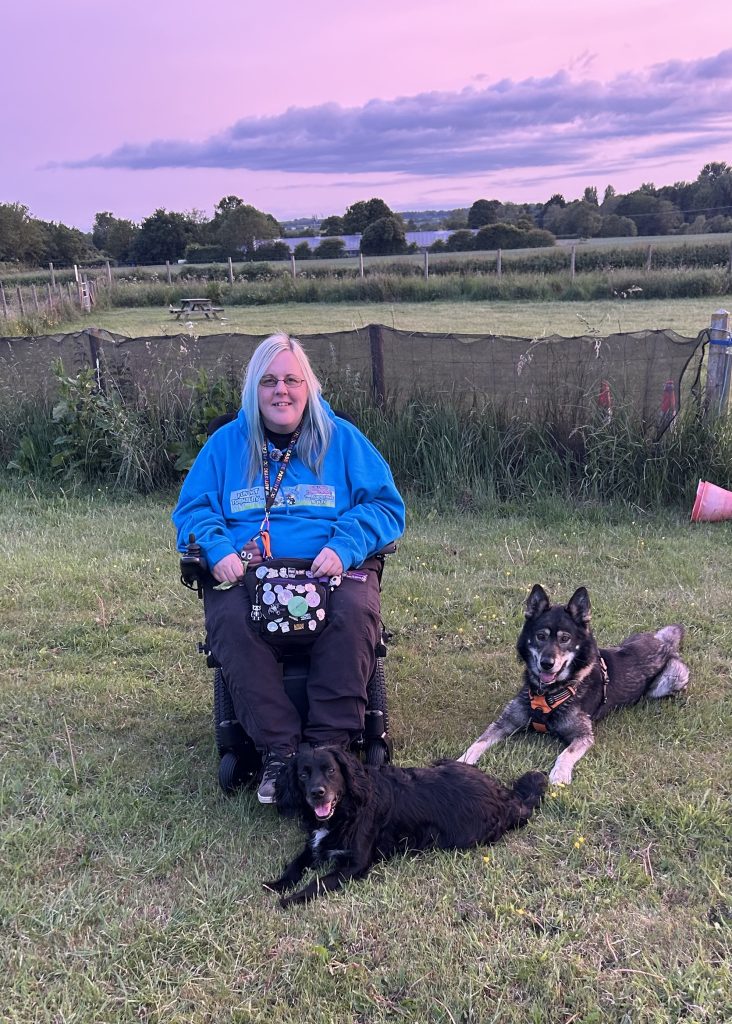
Tasha Attwood is a force-free dog trainer and behaviorist in Lincolnshire, UK. Very passionate about force-free training and methods, Tasha has trained four dogs, a hedgehog, and a rabbit to expert titles with trick titles -and two bearded dragons currently at novice trick title level -to not only enrich their lives but prove that force-free training can be done with any species. As a wheelchair user, Tasha absolutely loves to show training tutorials to demonstrate how dogs can be trained despite limitations.
Learn more at:
http://www.muttsnmischief.com.
Follow on Facebook.
In Case You Missed It…
March 2026 Advocacy Panel: Guardians and Professionals Working Together to Make a Kinder World for Pets.
February 2026 PPG Advocacy Panel: How Can Professionals Help Make a Kinder World for Pets?
January 2026 PPG Advocacy Panel: How Can Pet Guardians Help Create a Kinder World for Pets?

Pets and Their People Blog
Topics
Archives