



Ask a Trainer: How Can I Help My Reactive Rescue Dog?
Q: Our rescue dog is so reactive when he sees other dogs, whether through the window or on walks. It is making it difficult to walk him. I don’t know what to do to help him. – Kate A: Hi Kate, great question! This situation is going to take practice and consistency, but you can definitely make it much better. Start with figuring out what his favorite food is, for example, peanut butter or cream cheese. Have those things handy on a LickiMat® (frozen) or on a long handled spoon… Continued

Practical Training Tips for Pet People
At Pets and Their People, we’re on a mission to provide resources and practical tips to pet people…with a dose of encouragement and humor! So, if your cat is counter surfing or your dog’s digging up the garden, we’re here for you! Take a deep breath and enjoy diving into these helpful tips from our expert contributors: Is Your Cat Counter Surfing? The PPG Cat Committee Has an Answer! If the cat is getting on the counter to access a window, cover the window with a temporary blind or… Continued

Slithery Snakes and Other Scary Things!
It’s that time of year when we see many snakes and lizards warming themselves along our running pathways. Having lived in Florida for over 15 years, I know these are a common but not always welcome sight. As a certified dog trainer and behavior consultant, snake avoidance was built into my puppy-raising plan when Doogie came into our home as an 8-week-old rascal. We lived on 24 acres with water frontage, so it was essential to ensure Doogie had the skills and knowledge to avoid a critter safely should she… Continued

The ‘Touch’ Cue: Its Many Uses and How to Train It
Targeting is a behavior in which a dog uses a particular area of their body to target something. This is often your dog’s nose to your hand, but it has many other applications such as a chin target, a back foot target, a shoulder target, or for your dog to go to a specific location such as a mat, their bed or a station. Targeting is beneficial because it directs the dog to where you want them to go or what you want them to do with their body… Continued
Enjoy Loose Leash Walking Your Dog – Part 3: Training Game Resources
Helping Dogs Lead Fulfilled & Enriched Lives! Teaching your dog to walk nicely on a loose leash takes patience and time, but even committing to just ten minutes of daily training will put you both on the path to leash walking success. The time you spend working through this fun program will be well worth it when you’re out enjoying a lovely stroll with your best friend! We love training games! These will not only improve your dog’s leash walking skills, leading to a dog that is a pleasure to… Continued
Enjoy Loose Leash Walking Your Dog – Part 2: Your Leash Walking Tools for Success
Let’s Look at Leash Walking Equipment What We Recommend: A well-fitting, non-restrictive harness. For larger dogs and those dogs who tend to pull, we recommend a harness that has both front and back rings as, if needed, the leash can be attached at both points. Alternatively, a front-ring only harness is a good choice. Using the front attachment will assist you while you and your dog are working on your leash walking skills as, if your dog pulls towards something, the front leash attachment point will cause them… Continued

Teaching Puppies and Dogs to Love Their Harnesses
Introducing your puppy to a harness for the first time can be daunting for you both. For many puppies, the first time they wear a harness is often the first time they go for a walk- but it shouldn’t be! Outside has lots of new sights, sounds and smells they may never have experienced. This coupled with a strange piece of equipment they’ve never worn before and your puppy’s first walks can turn out to be a disaster. If you’ve rehomed a new dog, or purchased a new… Continued
Enjoy Your Time Loose Leash Walking Your Dog – Part 1
Do you have a dog that pulls you along like a steam train pulling freight? Do you secretly dread walking your dog because they pull the leash so tight that it makes your arms and shoulders ache? If so, walks are probably miserable for you, and, undoubtedly, for your dog too. We believe that when a dog cannot walk “nicely” that this can become a welfare issue. Lots of dogs who pull along their owners soon find themselves being left home alone. This reduction in enrichment and exercise can be… Continued
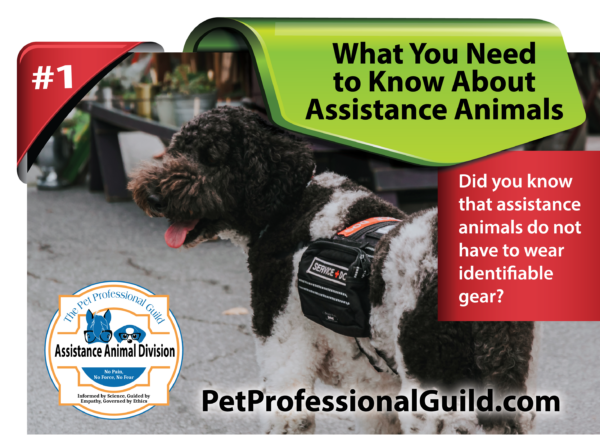
Why We Should Think Twice About How We Are Training Our (Service) Dogs
Service dogs have up to two years of training under their belt. This is so they can be prepared for doing their very important job for their handler. With all that training and the continued work they do throughout their lives, shouldn’t we be careful not to do anything to cause any medical problems or physical issues in the future if we can prevent it? Most people now know that dog collars can do harm to the dog’s neck so why are they still being used? Let’s Take a Look… Continued
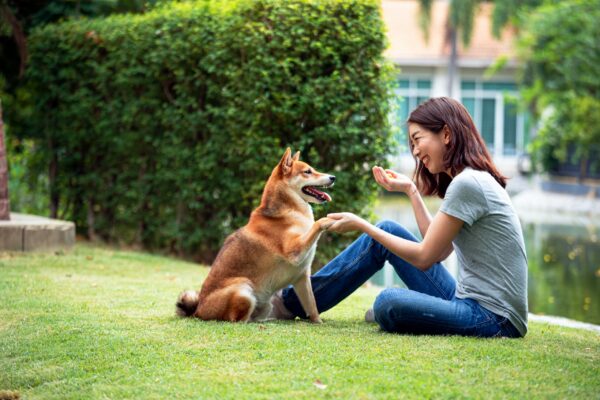
Shared Blog Post – The Proper Use of Food in Dog Training
The following article was originally written by Niki Tudge, Leah Roberts and Carole Byrnes in 2013 for the Pet Professional Guild and updated by Niki Tudge in January 2022 for The DogSmith. An excerpt: You choose if you want to motivate your dog with something he likes and will work to attain, or something he dislikes and will work to avoid. NOTE. WE ALWAYS USE FOOD because we want our dogs to feel safe and happy and not afraid of a consequence! Wait! What? “Always use food”??? We are sharing this post because… Continued
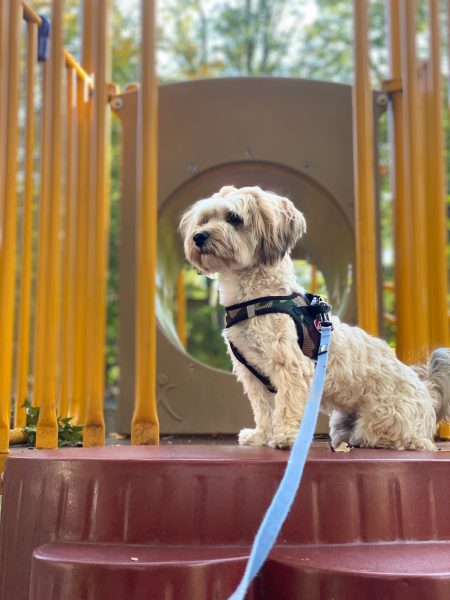
Determining If Your Dog Understands SIT
Students often ask, “How can I tell if my dog understands what I’m teaching him or her?” How we assess a dog’s training can vary with what we’re teaching, the environment where we are testing them, and the dog and their physical and emotional status at that particular point in time. Below you will find one method you can use to assess how well your dog understands a simple behavior like sit. You will give your dog a single visual or verbal cue and look for them to respond in… Continued
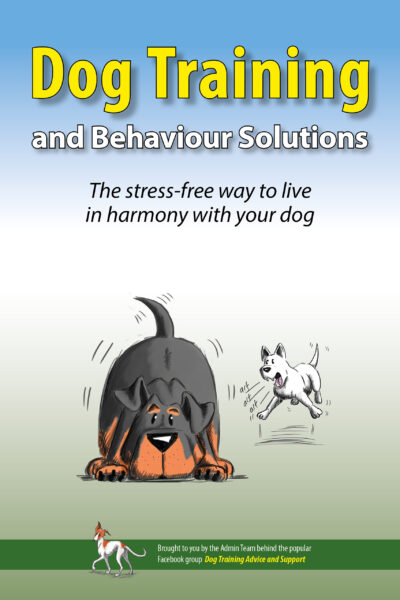
Book Review: “Dog Training and Behaviour Solutions”
Reviewed by Lottie Bennett, Lottie’s School for Dogs “Dog Training and Behaviour Solutions” is not your average dog training book. Indeed, it is a collaboration piece between multiple force-free and fear-free professionals and if two heads are better than one, then twelve must be even better than that! The book is a compilation of articles written by these professionals on various aspects of puppy and dog ownership, care, training, and managing and treating behavior problems. As such, you do not need to read the book cover to cover, but the… Continued

Getting Your Puppy or New Dog Used to Being Alone: Where’s Your Dinner Game
Where’s Your Dinner Game This game is an easy and simple way to build a bit of independence and confidence in a puppy or a new dog. It is based on free choice on the dog’s part and can be adapted in any number of ways as their confidence builds. It requires two people and a bowl of food! One person holds the puppy at one end of the room while the other places their bowl of food down at the far end of the room, and then quickly… Continued
Jumpy Dogs – Key Strategies That Might Surprise You
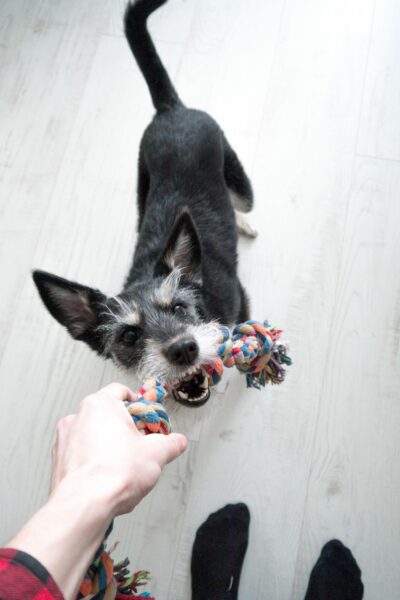
Traditionally you may have been told to ignore dogs or puppies when they jump up. However, this is unfair to your dog or puppy, as usually when they jump up they are nervous and are asking for reassurance, or you have been away and they are pleased to see you. Dogs are social animals and crave social and emotional contact from their guardians. Therefore, when your dog jumps, they have a social or emotional need, and as dog guardians we should fulfill that need. Provide Reassurance When your dog… Continued

Teach Your Cat to Like the Carrier – You Got This!
Does your cat run and hide as soon as she sees the carrier? Even worse, does your cat scratch and bite if you try to force her into the carrier? Take a deep breath! There is a way to teach your cat to like the carrier. Make the Carrier a Happy Place First, put the carrier in a part of the house frequented by your cat, so your cat gets used to seeing it. If the only time your cat ever goes into the carrier is for a vet visit,… Continued

Looking at Dog Training with Fresh Eyes
You have your treats ready. Maybe you have a clicker and a treat pouch too and you’re ready to train your dog. Yippee! Setting up structured training sessions where you do your homework from puppy or dog training classes is common, isn’t it? But what happens outside of these sessions? Do you ever think to yourself, “I’m not training now.”? Well, we have news for you! While we might not think we’re actively training, our dogs are always learning. They’re either learning that things they do get them rewards from… Continued

Managing and Training Fearful Equids
Fearful Equids Caring for fearful equids brings its own special challenges but can also be exceptionally rewarding. Here are a few simple tips to ensure your success. Move how you naturally move, but slower. One of the things most people do when they start working with fearful animals is to tiptoe around them and move hesitantly. Instead of helping, this can actually make them more anxious and it makes you seem suspicious. Instead, try moving the way you naturally move, but slower. As I often tell my students,… Continued

Tired of Furry Furniture? Try These Tips!
Why Do Pets Love to Get on the Furniture? There are many reasons, including some you may not have thought about: Comfort – Furniture is comfortable. Our pets need a soft cozy sleeping place to get good rest, especially as they age and start to have joint pain, etc. Security – Another big reason is being up higher than floor level gives your pets a better view of their surroundings. Only allowing your pets on the floor greatly reduces their environment and limits your pet’s ability to observe what is… Continued
Ask A Trainer: Tension in a Multidog Household
Q: After two weeks with us, my foster girl had a fight with my male dog. Both huskies. They now walk circles around each other and have low growls. How do I get them comfortable around each other again? I would love to take them to the park in my car but I am scared I will have a fight break out in the car. -R. A: Thank you for the question, R.! My first suggestion would be to reach out to a Pet Professional Guild (PPG) Dog Trainer in… Continued

‘Excessive‘ Barking – Are There Any ‘Quick Fixes’ That are Humane?
“Oh, I LOVE it when my dog shouts at the mail carrier and won’t be quiet when I ask him to,” said no one ever! Don’t we all love a quick fix? If only there was a quick way to make our dogs be quiet…well, one that’s humane that is. You see, there are many ‘quick fixes’ in dog training and some of them make your eyes water and are really not very nice for your dog. We love our dogs, don’t we? So there’s no need to go… Continued

When Can I Stop Training My Dog?
My students often ask when they can stop training their dogs. That’s when I ask them, “When do you anticipate you will stop learning?” My point is that we are still learning as long as we are alive. The same is true of our dogs. If dogs are awake, they are learning from both us and the environment in which they live. Since the environment is vast and almost always available to our dogs, it provides more learning opportunities than we do. For example, a child in a high chair or… Continued

Knowing How to Choose the Right Dog Trainer
Unlike some professions, there is currently no single ethical standard and no centralized or government licensing board for dog trainers and behavior consultants. As a result, consumers face a confusing landscape of philosophies and marketing language. The following suggestions will help dog owners find a competent, ethical trainer and keep their pet(s) safe. Ask for Details of Formal Education and Credentials Your trainer should have an educational background in how animals learn and are motivated. College, community college or vocational classes in psychology, animal behavior and/or animal training are a… Continued

Six Tips to Keep At-Home Dog Training Fun and Consistent
Keeping up the consistency of training your dog at home, when you don’t have a dog trainer looking over your shoulder or need to be top of the class can be hard! Let’s be honest, there is a lot of other stuff we do at home, and sometimes training our dogs takes a back seat, to you… know ALL THAT OTHER life stuff! But training relies on keeping things consistent and interesting; there aren’t any shortcuts, honestly. Dogs learn through repetition and being rewarded for things we want them to… Continued

Ask a Trainer: Dog Digging Holes in Flower Beds
Q: “Help! My dog is digging huge holes in flower beds!” (This question was submitted via the Pets and Their People Facebook page.) A: There are several reasons your dog may dig in the flower bed. There may be critters such as moles in the flower bed, or they may be one of those dogs who like to hide their toys. Let’s say you have ruled out these two possibilities, there is another reason your dog may be digging. Social Learning One of the biggest reasons I have found that… Continued
« Previous 1 2 3 4 Next »

Pets and Their People Blog
Topics
Archives